Choosing a room design style is less about finding the right label and more about recognising what you enjoy seeing, touching and using every day. A room can look beautiful in a saved photograph yet feel uncomfortable at home if it needs constant tidying, lacks storage or leaves nowhere for your favourite chair.
The most useful starting point is your ordinary life, not a trend forecast. Once you understand your routines, preferences and tolerance for upkeep, you can choose a look that feels personal without replacing everything you own.
Start with an ordinary day, not an inspiration image
Picture the room on a weekday evening. Someone may be working, another person watching television and a child spreading toys across the floor. Those activities tell you more about a suitable style than a perfectly arranged showroom does.
Write down what must happen comfortably in the space. Include less photogenic habits such as drying an umbrella, charging devices or keeping newspapers within reach. A style that only works when those things disappear is unlikely to remain satisfying.
Then choose three words for how you want the room to feel. Try “warm, relaxed and colourful” or “quiet, uncluttered and tactile”. These are more useful than “luxury”, which could mean anything from polished marble to a particularly comfortable reading chair.
Compare room design styles by their everyday trade-offs
Style names are useful search terms, not rules you must obey. Use this comparison to identify a direction, then adapt it to your home. Actual comfort and durability depend on the furniture, materials and finishes you select.
| Style direction | Details you might enjoy | Everyday trade-off to consider |
|---|---|---|
| Contemporary | Simple silhouettes, restrained detailing and a mix of finishes | Very glossy surfaces can make fingerprints more noticeable |
| Indian traditional | Carved wood, patterned textiles, craft objects and familiar motifs | Detailed furniture and closely arranged displays take longer to dust |
| Scandinavian-inspired | Light colours, practical furniture and natural textures | Pale upholstery needs a cleaning plan suited to your household |
| Japandi-inspired | Low visual clutter, muted colours and understated timber | The calm appearance depends partly on having enough storage |
| Industrial | Metal, exposed-looking finishes and substantial forms | Hard surfaces may need rugs, curtains or upholstery to soften sound |
| Eclectic | Collected objects, mixed periods and expressive colour | A few repeated colours or materials help the mix feel connected |
You may like the warmth of traditional furniture but prefer contemporary lighting. That combination is a useful discovery, not a failure to choose a style.
Find the details you like beneath the labels
Your room design preferences become clearer when you explain why you saved an image. Perhaps it is the generous seating rather than the beige palette, or the woven blinds rather than the minimalist styling.
Collect a small set of references and annotate each one with a specific reason. “I like this” is too broad. “The dark timber makes the pale walls feel warmer” gives you something you can reproduce without copying the entire room.
Look for repetition across your choices: curved or angular shapes, visible wood grain or smooth surfaces, strong contrast or close-toned colours. Notice the rooms you enjoy in person too. A friend's reading corner may reveal more about your taste than a photograph taken under studio lighting.
Remove references that depend on features you do not have, such as double-height ceilings or enormous windows. Keep the feeling you like, but stop treating the photograph as a shopping list.
Make the style pass your home's practical tests
A room design style needs to suit the light, climate and maintenance demands of the actual space. Before committing to a finish or palette, check how it behaves where you intend to use it.
Check daylight and evening light separately
A pale grey can look cooler than expected in a room with limited daylight. A warm neutral may appear much yellower under your existing bulbs. Neither effect can be judged reliably from a phone screen.
Try paint samples on more than one wall and inspect them in the morning, afternoon and evening. Place fabric and laminate samples beside the flooring and furniture you are keeping. Their undertones matter more than whether each sample looks attractive on its own.
For rooms with strong sun, ask suppliers about fading and suitable window treatments rather than assuming every material will perform equally well.
Be honest about cleaning and upkeep
Think about dust, pets, children, cooking habits and how often the room is cleaned. Deep grooves, open shelving and delicate textiles are not automatically poor choices, but they bring work with them.
If you love a pale sofa, investigate removable covers, cleaning instructions and the actual upholstery specification. If the home has recurring dampness, address the cause before choosing finishes to cover it. Appearance alone cannot establish whether a product suits those conditions.
The aim is not to choose the lowest-maintenance option everywhere. It is to reserve extra care for details you genuinely value.
Keep storage and comfort inside the style decision
The best room design for your household should still look convincing when everyday belongings are in use. If the reference image has two books and your family has two hundred, copying its shelving arrangement will not produce the same result.
Choose deliberately between concealed storage and display. Closed cupboards can support a calm backdrop while a smaller open section holds books, ceramics or family photographs. Traditional rooms can have discreet storage too, just as contemporary rooms can accommodate colourful collections.
Comfort also deserves a physical test. Sit on a sofa before buying where possible, check whether low seating suits everyone and consider how easily older family members can get up from a chair.
Style cannot rescue furniture that obstructs movement. Before ordering substantial pieces, use a room layout plan to check furniture placement and walking routes. This keeps the style choice grounded without turning the project into a full renovation.
Mix influences around a few consistent choices
You do not need a matching furniture set to achieve a coherent room design. A more personal result often comes from keeping a few elements consistent while allowing individual pieces to differ.
For example, an inherited teak cabinet can sit comfortably beside a simple upholstered sofa. Repeat a related timber tone elsewhere, pick up one colour from a traditional textile and keep surrounding lighting relatively quiet. The cabinet then feels intentional rather than stranded.
Choose one dominant direction and use the other influence selectively. If every object competes through colour, pattern, shape and scale, it becomes harder to appreciate any of them.
This also helps when family members disagree. Instead of debating “modern versus traditional”, identify the actual preferences: one person wants uncluttered surfaces while another wants warmth and visible craftsmanship. Closed storage, timber furniture and a few handmade objects may satisfy both.
Test the look before making expensive commitments
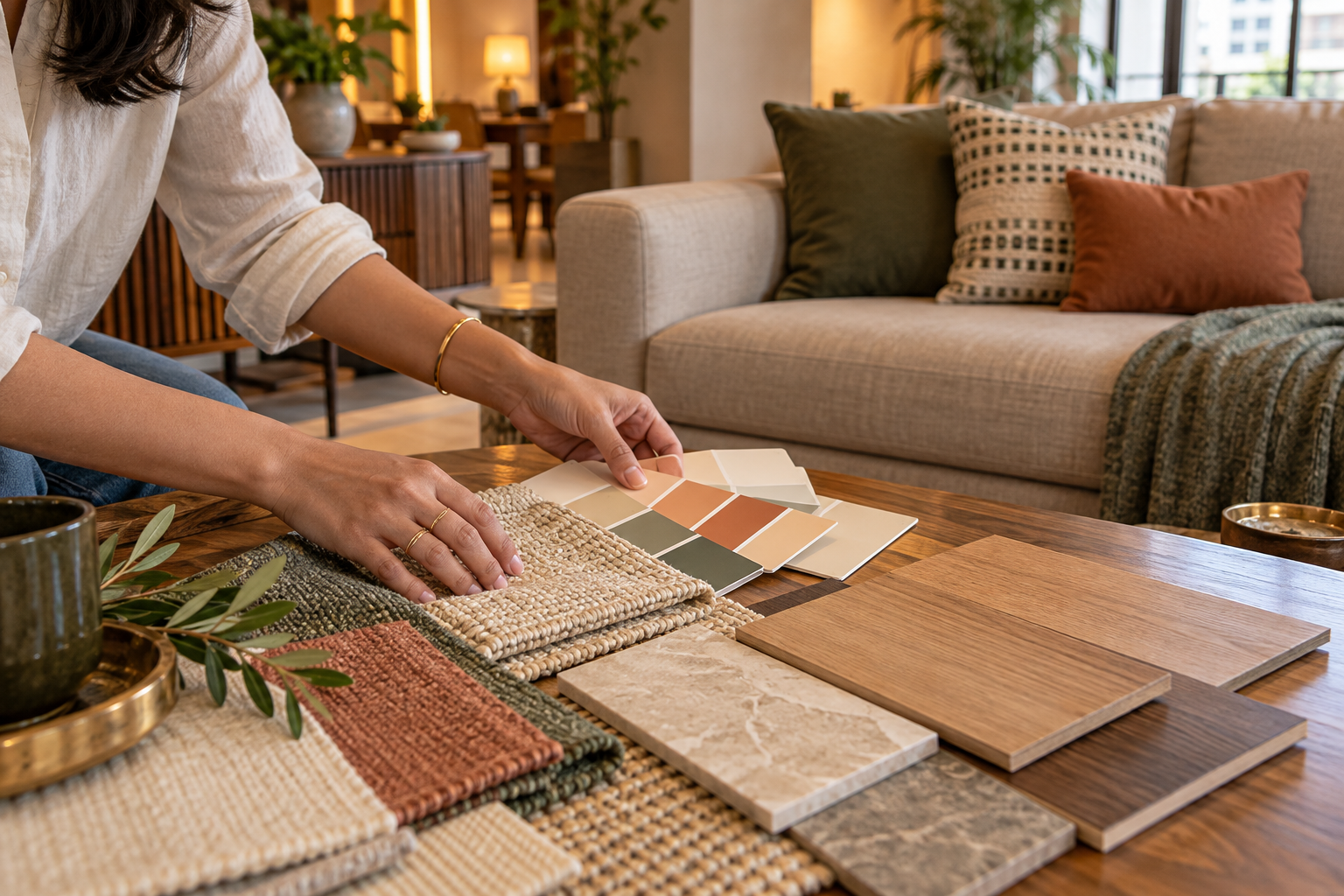
Create a sample board using the proposed paint, upholstery, curtain fabric and finish samples. Place them together in the room rather than assessing each item separately in a shop. Include a photograph of anything substantial you are keeping, especially flooring or existing wardrobes.
Next, separate purchases into difficult-to-change elements and easy-to-change accents. Flooring, fitted cabinetry and large furniture deserve more scrutiny than cushion covers or a lampshade. Spend on durability and comfort first, then use smaller items to explore colours or patterns you are less certain about.
A room design can look appealing in a collage but feel crowded when its pieces are shown together at scale. If you use a visualisation, check proportions, furniture relationships and the balance of finishes. The guide to how 3D room visualisation works explains what information helps turn a floor plan into a useful preview.
Treat a render as a planning aid, not proof of an exact colour match. Physical samples and supplier specifications still matter.
Write a short brief you can actually use
Once you have narrowed your preferences, put them into one paragraph. This prevents individual purchases from pulling the room in unrelated directions.
A useful brief might read: “We want a warm, contemporary living room for evening television, reading and occasional guests. We are keeping the teak cabinet and need concealed storage for toys. We prefer earthy colours, washable textiles and a few patterned accents. We do not want glossy finishes or low seating.”
That paragraph is more actionable than a folder of unrelated photographs. Share it with everyone involved before choosing products, including family members who will use the room daily.
Keep your budget alongside the brief. If a look depends on replacing perfectly serviceable furniture, ask whether a smaller change in lighting, upholstery or colour would deliver the part you actually like. An enduring style should leave room for both your existing possessions and future changes.
Frequently asked questions
Do all rooms need the same style? No. A consistent room design approach can come from repeated timber tones, related colours or similar detailing rather than identical furniture. A bedroom can feel quieter than a living area while still belonging to the same home.
How do I choose a style for a rented home? Start with what cannot change, such as flooring, wall colour and built-in cupboards. Develop the look through movable furniture, curtains, rugs and lighting that your tenancy permits. Check permission before drilling, painting or changing fittings.
Do I need to replace furniture that does not match? Not necessarily. Check its condition, comfort and scale first. A well-made piece may work with different upholstery or a new position. Replace it when it no longer serves the room, not simply because it belongs to a different style category.
Turn your preferences into a plan before you buy
If you know what you like but struggle to bring the choices together, Houspire's room-by-room design plans combine designer-reviewed planning with photorealistic 3D views, budget guidance and vendor guidance. You can share floor plans or photos and gather household preferences through a shared family questionnaire link.
There are no contractor commissions, and you can build with any contractor you choose. Use the plan to evaluate the overall look before committing to purchases, with your routines, comfort and existing furniture kept firmly in view.