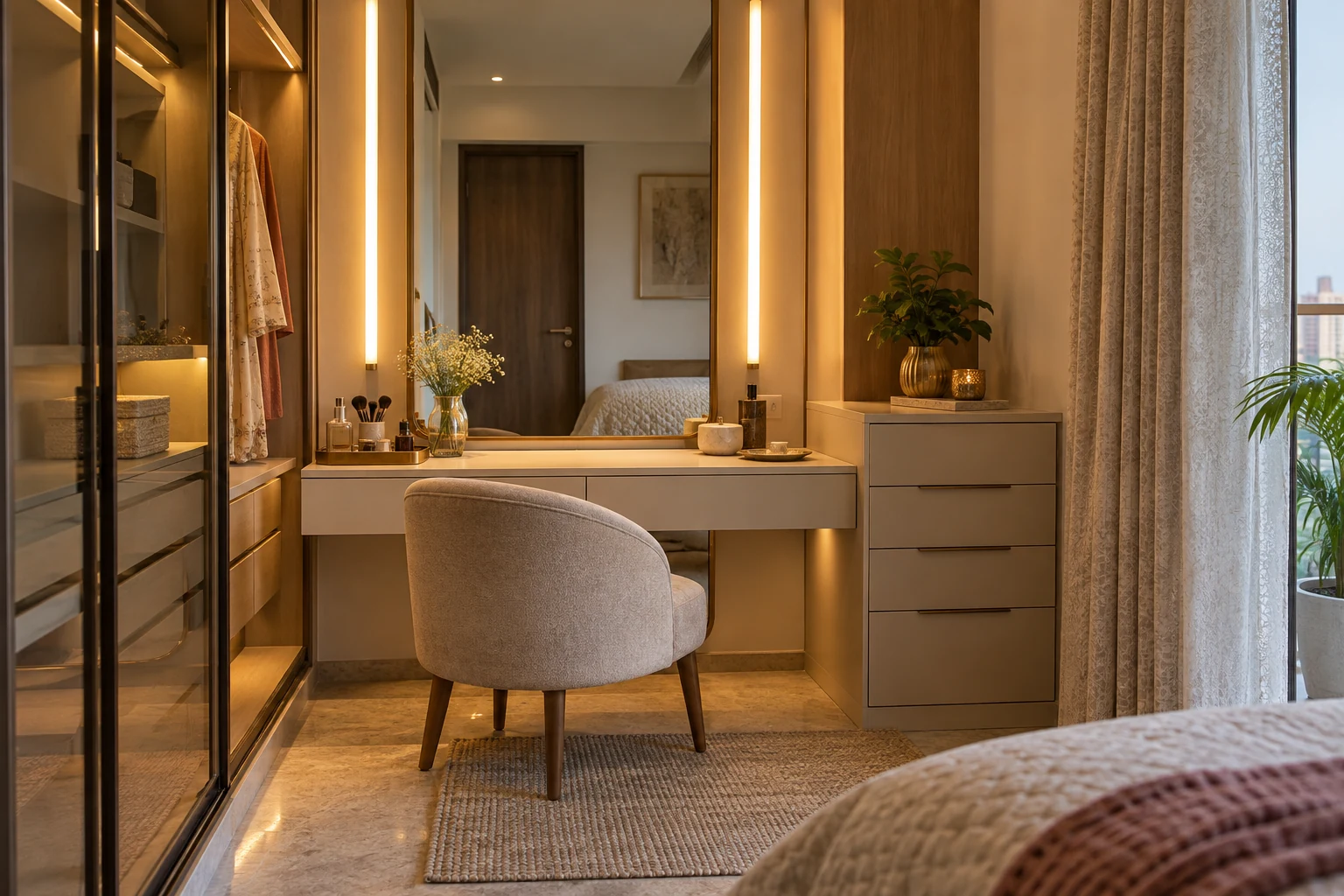
A dressing area can have an attractive mirror and still be awkward to use. Overhead shadows, reflections from a window and a chair that cannot pull out may undermine the arrangement. Plan the person, mirror, surface and light as one group.
These eight ideas apply to a separate dressing room or a compact bedroom corner. Start with the way the area will actually be used.
1. Decide between seated and standing use
Explain whether the mirror is mainly for grooming, dressing or both. Plan the relevant viewing positions before choosing its size and height. Include the seat, surface and space to stand up where needed.
2. Test the mirror from the actual position
Use a temporary outline to review the proposed location. Check what the mirror reflects and whether furniture interrupts the view. A mirror positioned for a photograph may not serve the user comfortably.
| Component | What to test |
|---|---|
| Mirror | View from seated and standing positions as required |
| Lighting | Shadows, glare and evening appearance |
| Controls | Reach and separate operation where needed |
| Storage | Equipment sizes and product instructions |
| Seating | Pull-out space and drawer conflicts |
3. Review light on the face
Compare the direction of illumination rather than choosing only by the appearance of the fitting. Assess shadows and glare from the normal position. Test products where possible, with an electrician advising on suitable installation.
4. Check daylight reflections
Review the mirror in relation to windows at different times. Strong reflections may make a position uncomfortable. Consider permitted window coverings and the effect of the room’s ordinary evening lighting before final approval.
5. Keep controls reachable
Decide where lights are switched and whether the arrangement needs separate control from the bedroom. Coordinate power for the equipment used at the surface. Plan this before cabinetry or finishes make changes more difficult.
6. Give equipment a defined home
List brushes, products and appliances, then plan storage around them. Follow equipment instructions for operation and storage, including heat and ventilation requirements. Do not assume a concealed charging or appliance drawer suits every product.
7. Protect chair and drawer movement
Test the console, seat and nearby wardrobe together. A drawer that opens into a pulled-out chair makes daily use awkward. Include passage space and any adjoining door in the measured layout.
8. Coordinate appearance after function
Choose the mirror frame, countertop, hardware and lighting as a related combination. Use the bedroom planning guide to review how the dressing area fits the wider room, supported by dimensions and specifications.
Frequently asked questions
Are lights around a mirror always better?
The result depends on the fittings, their position and the user. Test illumination and glare rather than choosing only by the frame style.
Can one mirror serve the bedroom and dressing table?
It may if the viewing positions and access suit both uses. Confirm the dimensions before ordering.
Should I copy the mirror height from a reference image?
No. Test placement for the actual users, furniture and tasks, then record the agreed dimensions.
Plan the room before you buy
Resolve viewing positions, useful light and everyday storage together before approving decorative details. Explore Houspire’s room-by-room design plans to review a proposed appearance before arranging execution with your chosen contractor. Confirm the views, supporting documents and revision terms included in your order.