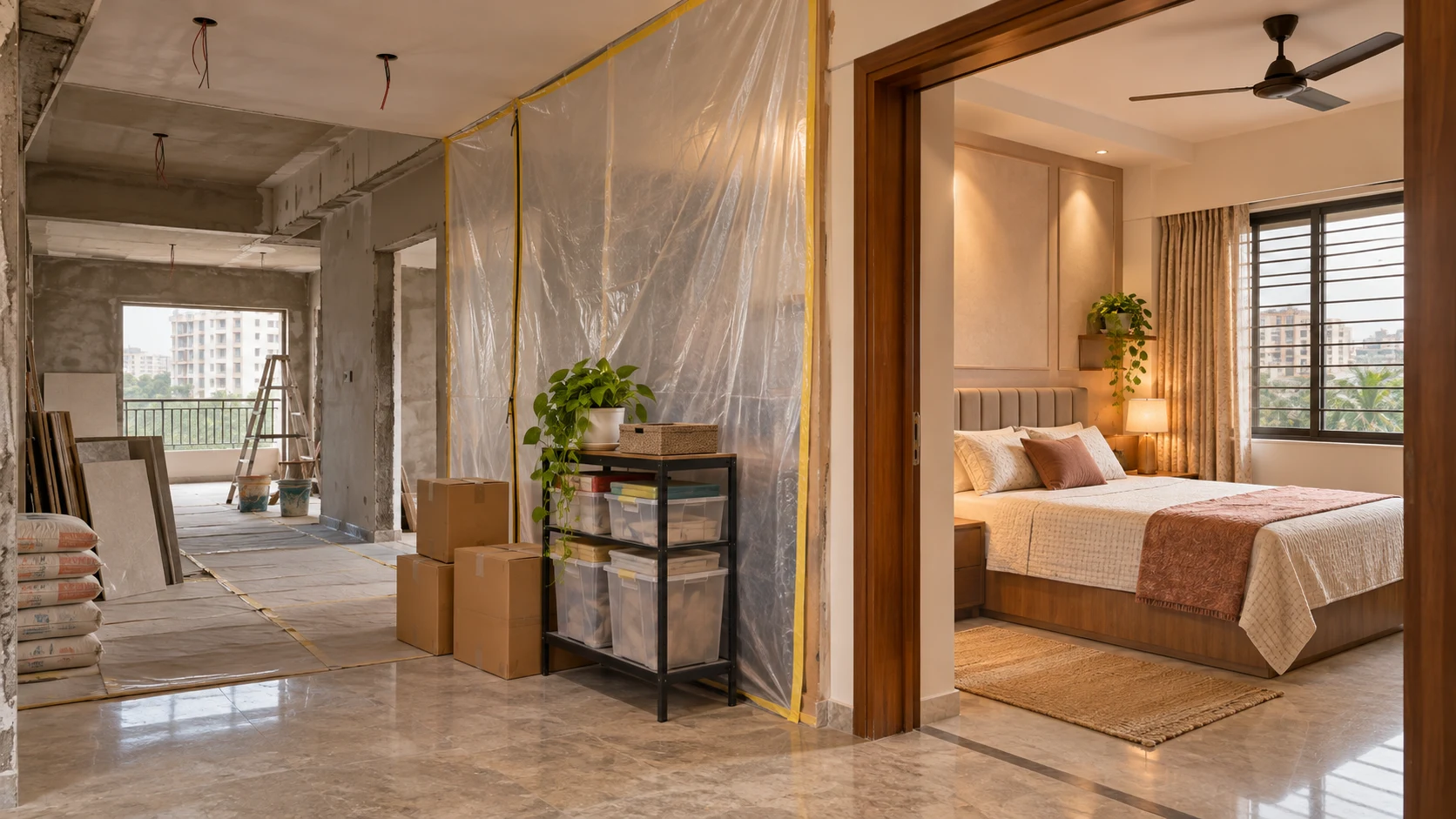
Before moving in while interiors are unfinished, confirm a usable bedroom and bathroom, essential utilities, a food arrangement and clear access separated from active work. Use the day-one checklist below to decide what must be complete and what can wait.
Separate Essential Work from Finishing Work
Ask the contractor to list every pending item by room.
Then sort the list into three groups.
| Priority | Examples | What to do |
|---|---|---|
| Must be resolved before occupation | Unsafe electrical work, unusable sanitation, unsecured openings, blocked exit route | Complete and verify before moving |
| Needs a workable temporary arrangement | Unfinished kitchen, delayed wardrobe, missing permanent curtains | Arrange food, storage or privacy before arrival |
| Can often wait | Decorative panels, artwork, selected accessories, nonessential furniture | Schedule later without disrupting essential rooms |
The impact matters more than the item’s price.
An inexpensive missing bathroom latch can affect privacy every day. An expensive decorative wall treatment may have little effect on whether the home is usable.
1. One Bedroom Must Be Ready for Sleeping
Choose a room that can remain outside the active work area.
Before moving in, confirm that:
- Dust-producing work in that room is complete.
- Required drying, curing and ventilation conditions have been met.
- Lighting and necessary electrical fittings are usable.
- Doors and windows operate properly.
- Privacy is provided.
- The room has been cleaned.
- Workers do not need to use it as a passage or material store. Bring a suitable sleeping setup, bedding and accessible storage for everyday clothing.
A completed wardrobe is helpful but not always essential. Labelled boxes or a stable temporary clothes rack can work if they leave movement and door access clear.
A room should be released for use by the contractor; a visually finished surface alone does not establish that it is ready for occupation.
2. At Least One Bathroom Must Be Fully Usable
“Tiles are finished” is not the same as “bathroom is ready.”
Check the actual facilities:
| Item | Day-one check |
|---|---|
| Toilet | Connected, flushing and free of visible leaks |
| Basin or washing point | Usable water supply and drainage |
| Bathing arrangement | Suitable for the household and ready for use |
| Door and latch | Working privacy |
| Lighting | Complete and usable |
| Ventilation | Functional arrangement |
| Floor and fittings | Clean, accessible and free of unfinished hazards |
Have the responsible trades complete the relevant checks. Respect required curing periods and the agreed waterproofing process.
If the flat has only one bathroom and it is unavailable, a promise to finish it tomorrow is not a reliable move-in arrangement.
3. Confirm Water, Power and Essential Connections
Test the services you will depend on immediately.
Have the electrician confirm that occupied areas have complete, suitable electrical installations. Loose wires and unfinished points should be made safe by the electrician before occupation.
Check:
- Drinking-water availability.
- Water supply to the bathroom and food-preparation area.
- Lighting along the route from bedroom to bathroom and entrance.
- Suitable connections for essential appliances.
- Access to shut-off valves and the electrical distribution board.
- The expected timing and duration of any remaining shutdowns. If using a gas appliance, have its connection checked by the appropriate authorised provider or technician before use.
Do not compensate for missing electrical work with extension leads running across passages or improvised high-load connections.
4. You Need a Food Plan, Not Necessarily a Finished Kitchen
You can sometimes move in before every kitchen cabinet is installed. But you need a clean, practical way to eat and handle utensils.
Choose one arrangement before arrival:
- A usable part of the kitchen separated from remaining work.
- A temporary food area with suitable services.
- Delivered meals with a clean serving and washing arrangement. Prepare:
- Drinking water.
- A small set of plates, cups and utensils.
- A clean work surface.
- Covered food storage.
- A waste bin.
- Refrigeration where needed.
- A suitable place to wash utensils. If using temporary cooking equipment, have its location and electrical requirements checked. Keep it away from packing materials and construction activity.
Do not treat a dusty countertop as usable simply because it has been installed.
5. Plan Dust Separation Before the Movers Arrive
Furniture covers do not separate construction from living space.
Ask the contractor how unfinished work will be contained and how occupied rooms will remain usable.
EPA renovation guidance recommends controlling dust, separating work areas and planning ventilation to limit pollutants spreading into occupied spaces. It notes that high-dust activities may require more substantial isolation. These are practical planning principles, not India-specific regulatory requirements. epa.gov
Confirm:
- Which room remains under construction.
- How workers and materials reach it.
- What barriers and dust controls will be used.
- How debris will leave.
- How cleaning will happen each day.
- Whether any activity requires the household to leave temporarily. If the remaining work includes extensive sanding, demolition or whole-flat flooring, reconsider the move-in date. A finished bedroom may not be enough if the route to it passes through active work.
6. Keep the Entrance and Daily Routes Clear
Walk through the flat with a laundry basket or shopping bags.
Check the routes between:
- Entrance and bedroom.
- Bedroom and bathroom.
- Food area and washing point.
- Occupied rooms and the exit. Do not stack boxes in front of doors, electrical panels or service-access points.
Confirm the main door locks, windows and balcony doors operate, and that necessary guards and railings are complete and secure.
For children and pets, establish how unfinished rooms, tools, chemicals and loose components will remain inaccessible.
7. Move Only What the Finished Areas Can Accommodate
A full household delivery can make the remaining work slower and more difficult.
Bring essential items first and defer bulky furniture where practical.
| Bring for day one | Consider delivering later |
|---|---|
| Sleeping essentials | Sofa for a living room still under construction |
| Daily clothing and toiletries | Decorative furniture |
| Medicines and important documents | Rugs and delicate accessories |
| Basic eating equipment | Large dining set if assembly space is unavailable |
| Work or school essentials | Books and display collections |
| Cleaning supplies | Items destined for unfinished storage |
If using storage, include handling, storage duration and the second delivery in your budget.
Keep one clearly labelled essentials box with you rather than sending it deep inside the moving truck.
8. Agree on Working Hours and Household Access
Once you occupy the flat, the contractor’s working arrangements need to account for daily life.
Record:
- Worker arrival and departure times.
- Key and entry arrangements.
- Which rooms are available for work.
- Noisy-work periods.
- Planned utility shutdowns.
- Material-delivery times.
- Daily cleaning responsibilities.
- Who will approve changes or answer questions. If you work from home, arrange an alternative location for drilling and other disruptive activities. A door can provide privacy without providing adequate sound separation.
For each unfinished item, assign a responsible person and target date.
9. Compare the Cost of Moving Early
Moving in early may reduce rent or temporary-accommodation expenses. It can also create additional costs.
Include:
- Meals while the kitchen is unavailable.
- Laundry services.
- Storage and repeat deliveries.
- Extra cleaning.
- Temporary privacy arrangements.
- Furniture protection and handling.
- Alternative workspace.
- Short stays elsewhere during disruptive work. Use actual estimates rather than assuming early occupation is automatically cheaper.
A Simple Comparison
Cost of postponing the move: extra rent or accommodation, plus any rescheduling charges.
Cost of moving early: temporary living arrangements, additional handling and cleaning, plus any contractor costs caused by phased access.
Also consider the practical effect on sleep, work and household routines.
Review the Flat Before Confirming the Move
Complete a walkthrough close enough to the move date to reflect actual progress, while leaving time to change arrangements.
Use this checklist:
- A bedroom is clean and released for occupation.
- A toilet, washing point and bathing arrangement are usable.
- Drinking water is available.
- Occupied areas have verified electrical installations.
- Food preparation or meal arrangements are ready.
- Doors, locks, windows and necessary guards are complete.
- The exit and daily walking routes are clear.
- Remaining work can be separated from living areas.
- Essential deliveries and assembly are confirmed.
- A written pending-work schedule is agreed.
- Temporary costs are included in the budget.
- There is a fallback plan if an essential service becomes unavailable. If a critical item fails, revise the move rather than relying on completion during unloading.
Frequently asked questions
Can I move in before the wardrobes are finished?
Possibly, if you have practical temporary clothing storage and the remaining installation can be separated from sleeping areas.
Do I need a finished kitchen before moving in?
Not necessarily. You need a clean, suitable arrangement for meals, drinking water, food storage and washing utensils.
Is it okay to move in while painting continues?
That depends on the products, work location, ventilation and separation from occupied areas. Follow product instructions and the contractor’s assessment; smell alone is not a readiness test.
What furniture is essential on the first day?
Prioritise a suitable sleeping setup and the furniture needed for your household’s immediate eating, working or accessibility requirements. A complete matching furniture set can wait.
Should I accept all deliveries before moving in?
Only if the rooms and delivery routes are ready. Staggering nonessential furniture can preserve workspace and reduce handling.
When should I postpone the move?
Postpone if essential sanitation, safe electrical conditions, secure openings, clear exit access or adequate separation from disruptive work cannot be maintained.
Related guides
- How to Renovate an Occupied Flat Without Moving Out
- New Flat Interior Checklist: From Possession to Move-In
Plan your next steps with Houspire
Prioritise a usable home, a protected delivery route and clear responsibility for unfinished work before fixing your move date.
Explore Houspire’s design plans to review your room arrangement before buying or commissioning work. Confirm the selected deliverables and have the execution team verify site dimensions and technical details.