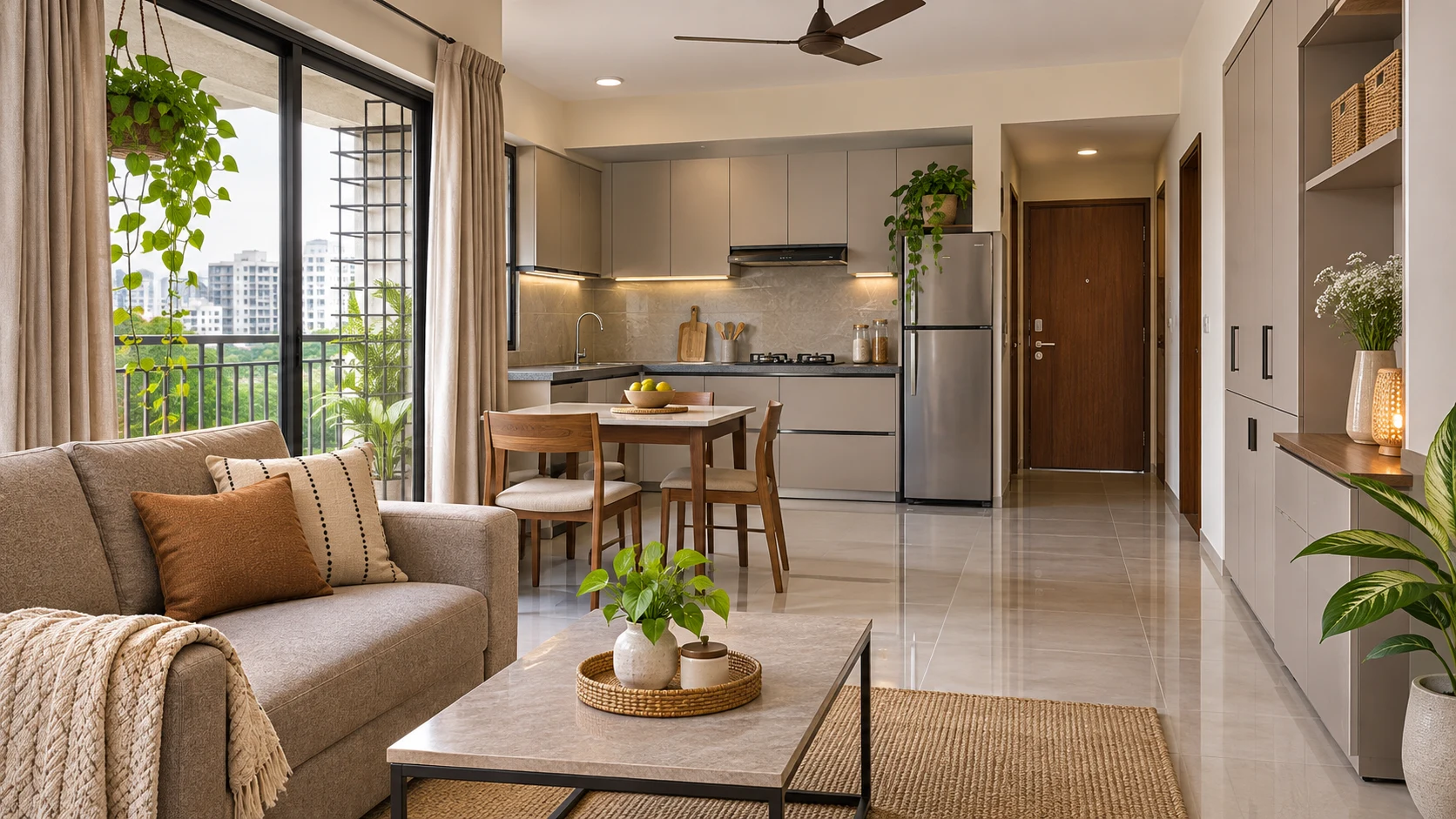
Before renting out your flat, prioritise working services, sound finishes and useful storage. Choose upgrades around the furnishing scope you intend to offer and the maintenance you can support, rather than assuming decorative work will produce a guaranteed rent increase.
1. Decide What You Are Offering Before Buying Anything
Choose whether you intend to provide an unfurnished, semi-furnished or fully furnished flat.
These labels can mean different things to different people. Write down the actual inclusions.
| Rental offering | Decisions to make |
|---|---|
| Unfurnished | Which existing fittings and fixed storage remain? |
| Semi-furnished | Are wardrobes, kitchen cabinets, fans, lights, ACs or water heaters included? |
| Fully furnished | Which beds, seating, dining furniture and appliances are supplied? |
Check comparable flats in the same building or nearby properties with similar size and condition. Speak to local agents about what prospective tenants request.
Treat listing prices as asking prices, not proof of achieved rent.
A tenant bringing their own furniture may prefer a flexible room over one filled with fixed pieces. A tenant relocating without belongings may value a complete, usable setup.
2. Repair Defects Before Improving Appearance
Start with a condition inspection.
Have relevant professionals assess:
- Leaks and recurring damp patches.
- Electrical fittings and circuits.
- Plumbing connections and drainage.
- Doors, windows, locks and latches.
- Loose cabinets, shelves and hardware.
- Damaged flooring or sharp edges.
- Supplied appliances. Do not cover dampness with paint or wall panels. Asian Paints advises identifying and treating the source of moisture before repainting, because unresolved dampness can lead to recurring finish failure. Asian Paints
Some work is necessary to make the property usable. It should not be judged only by whether it increases the advertised rent.
3. Refresh Walls Where They Need It
Repainting can make sense where walls are stained, patched or visibly inconsistent.
Choose a coordinated palette that works with the existing flooring and allows tenants to introduce their own furniture.
Before approving the work, specify:
- Surface repairs and preparation.
- Paint product and finish.
- Colour codes.
- Areas included.
- Protection of retained furniture and fittings.
- Cleaning and touch-ups. A cleanable finish may be useful in frequently touched areas, but check the product’s care instructions. “Washable” does not mean resistant to every stain or cleaning method.
Keep the colour and product details for future repairs. Avoid assuming an isolated touch-up will match an aged wall perfectly.
4. Improve the Kitchen Where Function Is Missing
A rental kitchen needs usable preparation space, working storage and accessible services.
Inspect the existing cabinets before deciding to replace them.
| Existing problem | Work worth assessing |
|---|---|
| Loose or rubbing shutters | Hinge repair or adjustment |
| Damaged handles | Compatible replacements |
| Localised cabinet damage | Repair or replacement of affected units |
| Poor internal organisation | Revised shelves or selected drawers |
| Worn fronts with sound cabinet boxes | Shutter or finish refresh |
| Widespread deterioration | More substantial replacement after inspection |
Price missing essentials separately from decorative upgrades.
A practical drawer or repaired sink cabinet may address a clear problem. Premium finishes, elaborate pull-outs and extensive display shelving need a stronger justification.
If appliances are included, provide the installation clearances and service access required for their actual models.
5. Add Wardrobes Only Where the Storage Case Is Clear
Wardrobes may be useful when your intended tenants expect fixed bedroom storage.
Before commissioning them, check whether they leave room for practical bed and desk arrangements.
Prioritise:
- Useful hanging space.
- Accessible shelves.
- A sensible drawer arrangement.
- Durable, repairable hardware.
- Door movement that does not obstruct the room. Avoid filling every bedroom wall with cabinetry. Excessive storage can make the flat harder to furnish.
Compare ready-made and fitted options against the same requirements. Ready-made furniture can offer flexibility, while fitted storage may make better use of an awkward niche.
Follow the product’s fixing instructions. IKEA, for example, advises securing relevant furniture such as chests of drawers to the wall using the provided restraints to help prevent tip-over accidents. IKEA
6. Make Bathrooms Complete and Easy to Maintain
Inspect bathroom function before considering a visual makeover.
Check taps, flush mechanisms, drainage, ventilation, doors, mirrors and any supplied water heater.
Useful work may include:
- Repairing leaks.
- Replacing broken accessories.
- Restoring damaged seals or joints through appropriate assessment.
- Providing practical toiletry storage.
- Improving inadequate lighting.
- Replacing fittings that are difficult to operate or maintain. Do not replace sound tiles solely because they are not your preferred colour.
If considering a shower enclosure, check the actual space, cleaning access and door movement. It should solve a water-management problem without making the bathroom difficult to use.
7. Choose Simple Lighting and Practical Window Treatments
Make sure rooms have usable general lighting and working controls.
Additional task lighting may be useful where a desk or reading area is part of the furnishing plan. Elaborate lighting scenes and decorative ceilings are optional purchases rather than automatic rental essentials.
For curtains or blinds, consider:
- Privacy.
- Light control.
- Washability or cleaning requirements.
- Replacement availability.
- Interference with windows, wardrobes and AC units. Standard, serviceable hardware can make future replacements easier. Keep spare components and product details where practical.
8. Buy Appliances and Loose Furniture Selectively
For a furnished flat, assess each purchase against the advertised offering and likely household.
| Item | What to check before supplying it |
|---|---|
| Bed and mattress | Room fit, condition, support and cleaning arrangements |
| Sofa | Seating need, delivery access and maintainable upholstery |
| Dining table | Whether chairs can be used without blocking circulation |
| AC | Room suitability, installation condition and servicing |
| Refrigerator | Capacity, placement, ventilation and condition |
| Washing machine | Suitable location, connections and maintenance access |
| Desk | Whether it serves a likely tenant need without crowding the room |
Every supplied item adds something to inspect, document and maintain.
Do not furnish the second bedroom so specifically that it can only function as a child’s room if prospective tenants may need an office or guest room.
Which Upgrades Usually Deserve a Closer Look?
Use this as a decision guide rather than a promise of rental returns.
| Priority | Upgrades to assess | Reason |
|---|---|---|
| First | Repairs, functioning services, secure doors and sound fittings | Establishes a usable property |
| Next | Kitchen function, appropriate storage, lighting and privacy | Supports everyday living |
| Depends on the offering | ACs, appliances, beds, sofa and dining furniture | Useful when aligned with tenant demand |
| Usually optional | Decorative ceilings, premium wall panels, bespoke display units | Require evidence that the cost serves your rental strategy |
Retain sound elements wherever they meet the intended brief. Replacing everything is not necessary to present a well-maintained flat.
How to Set the Upgrade Budget
Divide the proposed work into three groups:
- Required repairs: Work needed to correct defects and restore function.
- Useful improvements: Storage, fittings or appliances supported by the rental brief.
- Optional decoration: Items that can be deferred without reducing essential use. Obtain itemised quotations and compare repair with replacement.
Your complete budget should include materials, labour, delivery, installation, removal, cleaning and applicable taxes. Also account for the time the flat remains unavailable while work is completed.
If you are evaluating a possible rent increase, use a transparent calculation:
Simple recovery period = additional upgrade cost ÷ estimated additional monthly net income.
This is only a planning calculation. The rent increase is uncertain, and maintenance, vacancy, financing and replacement costs can change the outcome. Keep essential repairs separate from speculative rent-premium decisions.
Prepare a Clear Handover Record
Before tenants move in:
- Photograph the condition of rooms, furniture and appliances.
- Record supplied items and accessories.
- Test doors, drawers, taps, lights and appliances.
- Note model numbers and available warranties.
- Provide operating and care instructions.
- Record existing defects and agreed pending work.
- Clarify repair-reporting arrangements in the rental documentation. Use accurate listing photographs and describe the actual inclusions. If an image is digitally staged, label it clearly so prospective tenants do not mistake proposed furniture for supplied items.
Frequently asked questions
Should I fully furnish my flat before renting it out?
Check demand for comparable properties and decide on the actual inclusions. Full furnishing adds purchase and maintenance responsibilities and may not suit tenants who own furniture.
Will a modular kitchen increase the rent?
It may improve the flat’s usefulness or appeal, but a rent increase is not guaranteed. Compare the existing kitchen’s condition with what similar rentals offer.
Should I repaint between tenants?
Inspect first. Cleaning or selected repairs may be sufficient in some areas, while heavily marked or inconsistent surfaces may need repainting.
Are built-in wardrobes worth adding?
They can be useful when tenants expect storage and the layout accommodates them. Compare capacity, room flexibility and complete cost before deciding.
Is a false ceiling necessary for a rental flat?
No. Suitable surface-mounted lights and other fixtures can provide practical lighting without a false ceiling.
What should I prioritise on a limited budget?
Correct defects first, then address kitchen and bathroom function, lighting, privacy and clearly needed storage. Defer decoration that does not improve everyday use.
Related guides
- Flat Interior Design for Rented vs Owned Homes
- Affordable Interior Design: What to Keep, Simplify and Phase
Plan your next steps with Houspire
Define the rental offering, price repairs before upgrades and record the condition of supplied items at handover.
Explore Houspire’s design plans to review your room arrangement before buying or commissioning work. Confirm the selected deliverables and have the execution team verify site dimensions and technical details.