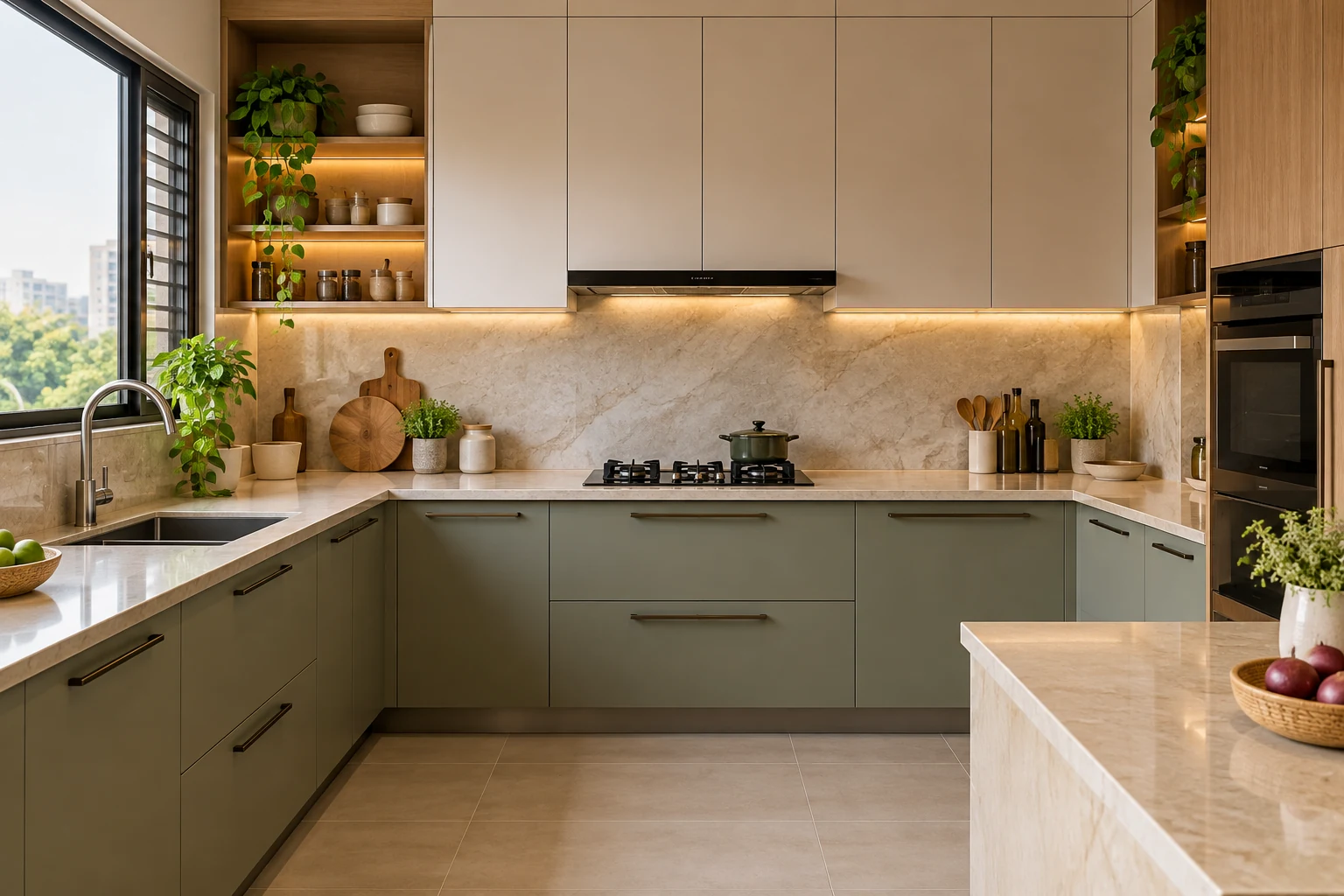
An easy-to-clean kitchen is shaped by more than the colour of its shutters. Profiles, joints, exposed items and the ability to reach corners affect the work involved in keeping it tidy. A surface that looks seamless in a render may still have details that collect residue.
Choose materials by their specification and care instructions, then consider how the whole arrangement will be cleaned during everyday use.
1. Compare cabinet profiles closely
Simple fronts can reduce decorative grooves to clean. Review edge details and joints as well as the central panel. Ask how the selected finish handles routine wiping and which cleaning products should be avoided.
2. Choose handles you can clean around
Try the actual handle with the proposed shutter. Check the gap, grip and places residue may gather. Handleless arrangements also need a cleaning plan; they are not automatically maintenance-free.
| Detail | Cleaning question |
|---|---|
| Shutter profile | Are grooves and edges easy to reach? |
| Backsplash | How are joints cleaned and maintained? |
| Appliances | Can service areas be accessed? |
| Storage | Can compartments be emptied and wiped? |
3. Review backsplash joints
Compare the number and location of joints and how they will be finished. Ask about cleaning and repair requirements for the selected system. Avoid choosing a material solely because a small showroom sample looks smooth.
4. Keep useful counter space clear
A counter covered with appliances and containers takes longer to wipe. Give daily objects defined storage without making them inconvenient to retrieve. Preserve a preparation zone that can be cleared and cleaned easily.
5. Plan access around equipment
Confirm how appliances, filters and service points are reached. Decorative enclosures should not prevent maintenance. Follow equipment installation instructions and agree who handles removal or access when servicing is needed.
6. Limit unnecessary open display
Open shelves can suit selected items, but every exposed object adds cleaning work. Balance display with enclosed storage according to cooking habits and the household’s preferences.
7. Detail the sink junction carefully
Review the sink, countertop, tap and backsplash together with the responsible supplier. Ask how junctions are sealed, cleaned and maintained. Installation quality matters alongside the chosen sink style.
8. Include waste and cleaning supplies
Plan where bins, cloths and cleaning products go. Check that containers can be removed and the surrounding cabinet can be cleaned. Keep unsuitable products separated from food and accessible only to appropriate users.
9. Make internal storage reachable
Choose divisions and accessories that can be emptied and cleaned. Complicated mechanisms should justify their space and maintenance needs. Compare the actual product rather than a generic description.
10. Test the cleaning routine before approval
Walk through wiping counters, reaching corners and emptying bins on the plan. Review kitchen layout and storage before adding a feature that obstructs these tasks.
Frequently asked questions
Are glossy cabinets easier to clean?
It depends on the product and the marks you are concerned about. Compare samples and care instructions instead of assuming sheen determines maintenance.
Is a joint-free appearance maintenance-free?
No. Ask how junctions, sealants and edges are installed and maintained, even when they are visually discreet.
Should I avoid all open shelving?
Choose it selectively if the access and display benefit is worth the cleaning effort for your household.
Plan the room before you buy
Choose practical details together, with the household’s cleaning routine treated as part of the design brief. Explore Houspire’s room-by-room design plans to review a proposed appearance before arranging execution with your chosen contractor. Confirm the views, supporting documents and revision terms included in your order.