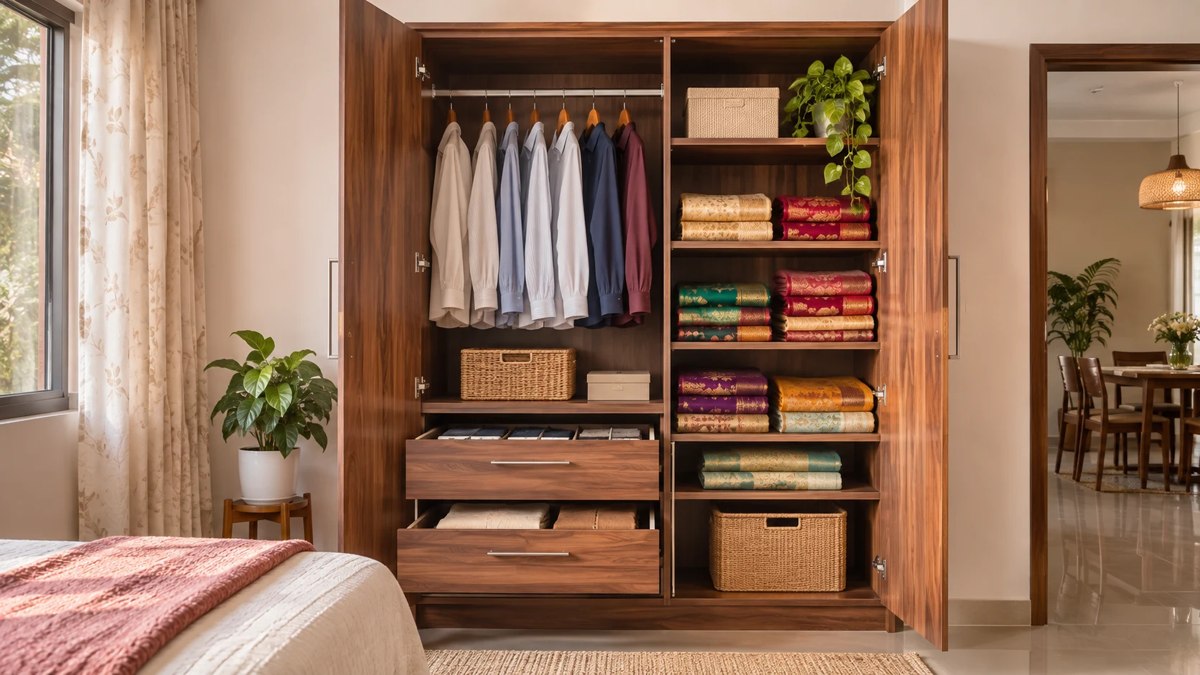
A 6-foot wardrobe internal design for two people should follow each person’s hanging, folding and drawer needs. Compare equal 36–36 allocations with a 42–30 split, then check the actual clear openings behind the shutters.
Layout 1: A 36–36 split when both people need their own section
An equal split works well when both people want a mix of hanging space, shelves and a personal drawer. The two halves can have different interiors. One person might need a rail for office shirts while the other prefers an extra shelf for folded kurtas.
| Storage zone | Person A · 36-inch section | Person B · 36-inch section |
|---|---|---|
| Upper shelf | Occasionally worn clothes or spare linen | Occasion wear or garment boxes |
| Everyday hanging | Rail for shirts and jackets | Rail for frequently worn kurtas or dresses |
| Everyday folded storage | Shelf for jeans and T-shirts | Shelves for folded kurtas, sarees or knitwear |
| Lower storage | Personal drawer for smaller items | Personal drawer or an open shelf for bags |
What to check: Hang your longest everyday garment on its usual hanger and measure from the rail to the hem. If it would fall across the drawer below, move the drawer to the neighbouring compartment or reserve that bay for longer clothes. This is easier to catch on a front elevation than in a 3D view with the shutters closed.
Layout 2: A 42–30 split when one person hangs more clothes
Suppose one person wears shirts and trousers to work most days, while the other keeps sarees folded and stores blouses separately. An equal split can leave the first person squeezing shirts onto a crowded rail while the second has a rail they barely use.
| Storage zone | 42-inch section · mostly hanging | 30-inch section · mostly folded |
|---|---|---|
| Upper shelf | Seasonal clothing or spare bedding | Occasion-wear sarees in their usual covers |
| Main section | Hanging rail for shirts, jackets and trousers | Shelves spaced around the owner’s actual folded stacks |
| Easy-reach storage | Shelf for everyday jeans or work bags | Separate shelf for frequently worn sarees and kurtas |
| Smaller items | Drawer for socks, belts and accessories | Drawer for blouses and petticoats |
What to check: Take one saree stack, folded the way you keep it at home, and measure its width and depth. If you store sarees in boxes, measure a filled box with its lid on. This tells you whether the proposed shelf can take two stacks side by side and whether you can remove one without disturbing the other. If most sarees are hung, give that person the wider rail section instead.
Where should drawers go in a sliding wardrobe?
Place each drawer where its entire front is accessible when the sliding shutter is open. A drawer can fit inside its compartment and still catch against the edge of a shutter.
This matters especially with the 42–30 layout. A wider hanging bay can work behind sliding shutters, but a full-width drawer in that bay may be wider than the opening the shutters provide. A narrower drawer unit positioned inside the accessible part of the bay is one way to resolve it.
Before signing off, ask to see the front elevation in two positions: left shutter open and right shutter open. On each view, mark which drawers can pull out fully. For hinged shutters, check the same movement against the open door, hinges and nearby bedside table.
How much of the wardrobe should go to each person?
Use the wardrobe you already own as a measuring tool. It gives you a more reliable starting point than counting garments, especially if one person owns bulky jackets and the other owns lightweight shirts.
- Measure the rail space each person uses. Keep clothes on their usual hangers with enough room to take a garment out. Measure the occupied length.
- Measure one typical folded stack. Use the shelf depth and stack height you find comfortable in daily use.
- Separate daily wear from occasional wear. Keep work clothes, everyday sarees and frequently used accessories within easy reach. Assign upper storage to items you use less often.
- Decide what lives elsewhere. If suitcases already have a place in the utility or spare room, there is little reason to sacrifice everyday wardrobe space for them.
For example, if your current work shirts already occupy 38 inches of rail, a 36-inch allocation will feel tight before you add jackets. If both people use about the same rail length but one needs more folded storage, keep the equal split and change the shelf arrangement on that side.
What should you check before approving the wardrobe drawing?
| Ask your designer or carpenter | What the drawing should show |
|---|---|
| How much usable width does each person get? | Clear internal dimensions after panels and dividers |
| Will our longest clothes hang freely? | Distance from the rail to the shelf or drawer below |
| Can we open every drawer? | Shutter positions, clear opening and drawer width |
| Can someone use the wardrobe beside the bed? | A top view showing the bed, bedside table and fully open drawer or shutter |
| Will our largest loft item fit? | The clear loft opening as well as its internal dimensions |
Frequently asked questions
Is a 6-foot wardrobe enough for a couple?
It can be enough if both people’s everyday hanging and folded clothes fit within the planned compartments. The deciding factor is what else the wardrobe must hold. A couple storing winter bedding, suitcases and occasion wear in the same unit will have less space for daily clothes.
Should both people get exactly 3 feet each?
An equal split is convenient when storage habits are similar. If one person needs a longer hanging rail and the other prefers shelves, test a 42–30 split against the clothes you already own. Either person can take the wider section.
What is the best way to store sarees in a shared wardrobe?
Plan around how you already store and retrieve them. For folded sarees, size the shelves around your usual stacks or boxes and keep frequently worn pieces within reach. For hanging sarees, measure them on their hangers and reserve enough clear drop below the rail. Keep matching blouses and petticoats close to the sarees you wear most.
Plan your next steps with Houspire
Use Houspire to explore design support for your room before committing to purchases. Confirm the selected package’s views, drawings, revisions and exclusions; have your execution team verify site measurements and construction details.
For related guidance, read choosing wardrobe storage for your clothes and sliding versus hinged wardrobes.