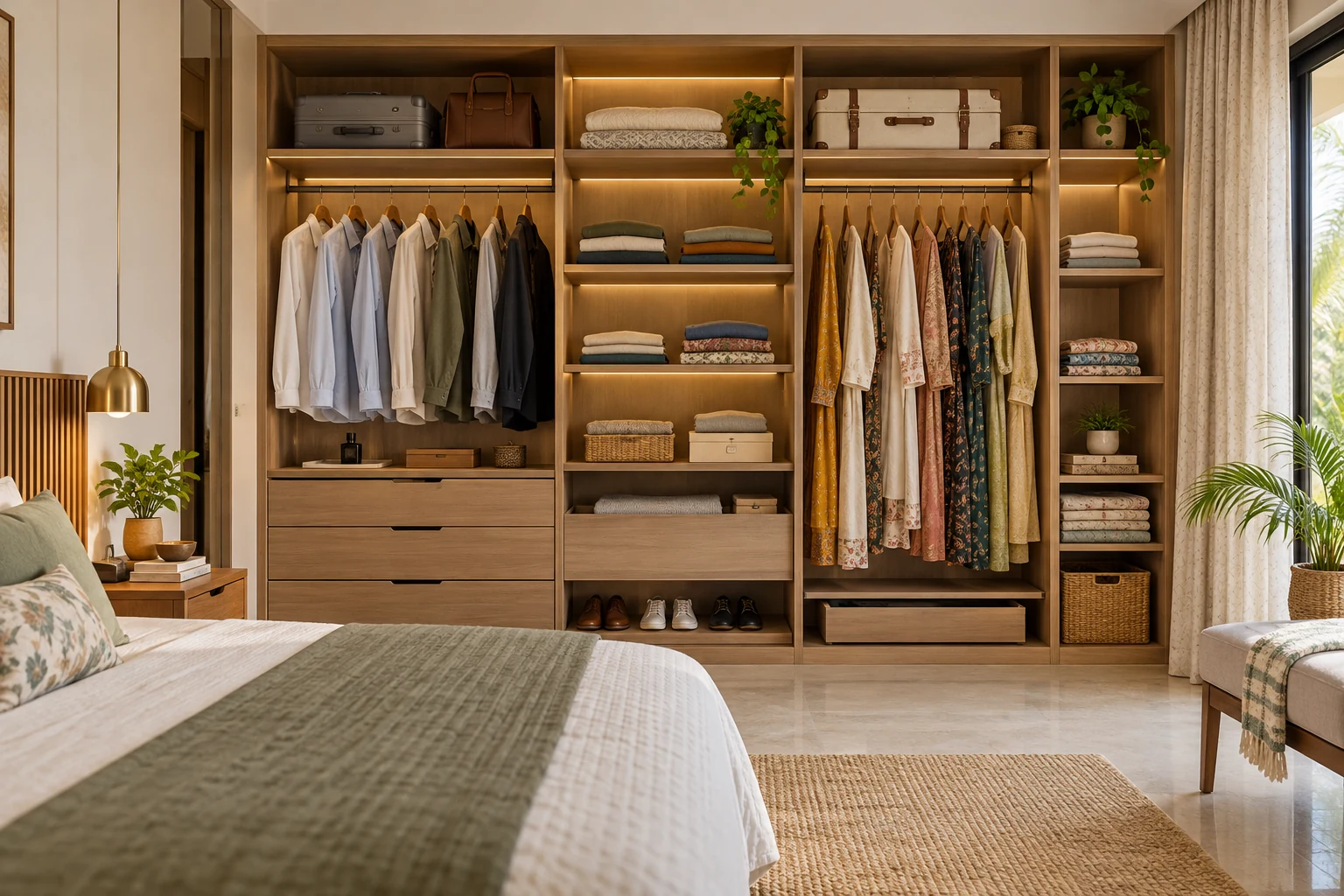
The right wardrobe starts with your clothes rather than its shutter colour. Two units with the same exterior dimensions can offer very different storage depending on their internal divisions and hardware.
Sort what you own, identify what is used daily and measure the space before selecting the door style. This creates a clearer brief for both a designer and a furniture supplier.
Make an inventory by category
Separate long garments, shorter hanging items, folded clothing, accessories and luggage. Note what currently gets crushed, misplaced or stacked too deeply. Discuss foreseeable changes without using uncertain future storage as a reason to enlarge every unit.
Choose hanging and shelf space deliberately
Check actual garment lengths and how you prefer to store them. Decide which items belong in drawers and which on shelves. Avoid copying internal divisions from a reference image without comparing them with your belongings.
| Clothing category | Detail to discuss |
|---|---|
| Long garments | Required hanging length and retrieval |
| Folded clothes | Shelf width, depth and stacking |
| Small accessories | Useful drawer divisions |
| Luggage | Actual case dimensions and frequency of access |
| Shared wardrobe | Clear allocation for each user |
Test the wardrobe within the bedroom
Include the bed, bedside furniture, desk and door swings. Check where a user stands while opening the unit and taking out clothing. A useful wardrobe should not make the rest of the room difficult to navigate.
Compare hinged and sliding access
Review how much of the interior is available at one time, operating space and maintenance. Door type affects the organisation behind it. The wardrobe comparison guide can support a more specific discussion with suppliers.
Specify drawers and accessories individually
Check capacity, internal dimensions and hardware models. A pull-out or organiser should solve a defined problem. Include the selected mechanism in the quotation so an apparently similar substitution does not change function unexpectedly.
Coordinate materials and the exterior appearance
Agree the board specification, thicknesses, finish, edges and relevant hardware with the supplier. Compare physical samples beside the bed and floor. A render can show the desired composition but does not establish construction quality.
Approve internal drawings before fabrication
Ask for the dimensions and details needed to price and build the unit. Confirm who verifies the final site, including uneven surfaces and service positions. Keep the approved drawing and specification versions together when comparing quotations.
Frequently asked questions
Should I choose the tallest possible wardrobe?
Choose accessible capacity for actual belongings and check installation conditions. Extra height is useful only when its storage can be used appropriately.
Can two people share different internal arrangements?
Yes. Allocate the interior by their clothing and routines rather than dividing it identically by default.
Does a 3D wardrobe image show the interior?
Not if it shows closed shutters. Request a separate internal layout or detailed drawings where needed.
Plan the room before you buy
Use your clothing inventory and the bedroom layout to define the wardrobe, then refine its exterior finish. Explore Houspire’s room-by-room design plans to review a proposed appearance before arranging execution with your chosen contractor. Confirm the views, supporting documents and revision terms included in your order.