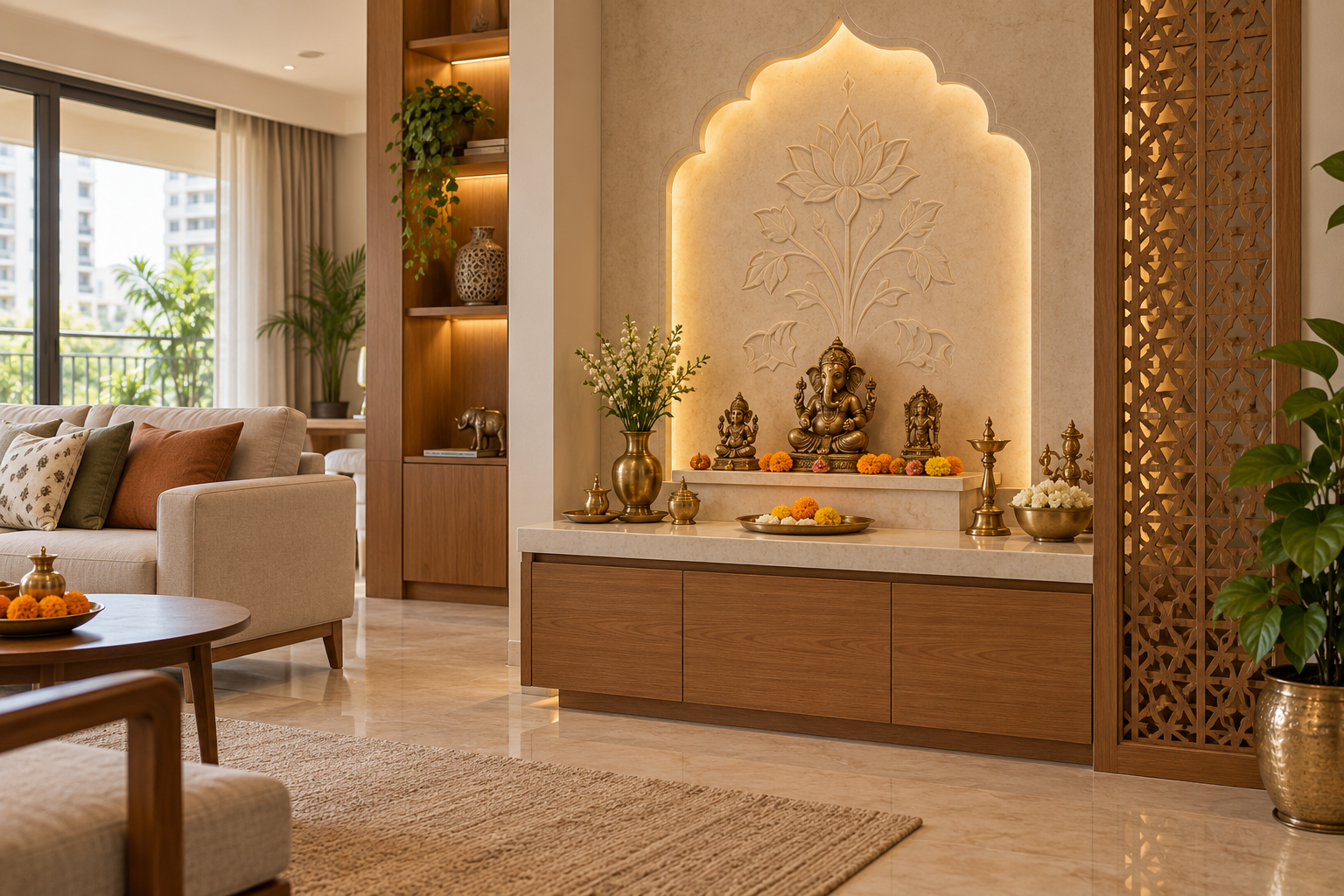
Pooja Room Design: Ideas for Apartments and Small Spaces
A pooja space can be a dedicated room, a compact cabinet or a carefully planned corner. Its design should reflect how your household worships, the objects you use and the space available.
A practical pooja room design brings together suitable placement, comfortable access, organised storage, easy-to-clean surfaces and thoughtful lighting. Start with your daily rituals before choosing carved shutters, decorative panels or a particular finish.
This guide explores ways to create a personal, functional pooja space in an apartment or small home.
How Do You Choose the Right Pooja Room Design?
Begin with the people and objects the space needs to accommodate.
Consider whether you sit on the floor or use a chair, how many people pray together and whether the space is used briefly each day or for longer rituals.
Measure existing idols, framed images and frequently used items. Include the area needed for arranging offerings and accessing storage.
| Requirement | What to plan |
|---|---|
| Daily prayer | An accessible place for the items you use regularly |
| Seated worship | Suitable floor or chair space in front of the unit |
| Multiple users | Enough room for the household’s usual arrangement |
| Ritual supplies | Storage for books, cloths, vessels and other items |
| Privacy | An enclosure or separation appropriate to the room |
| Cleaning | Reachable surfaces and manageable decorative details |
| Household traditions | Specific placement, orientation or arrangement preferences |
A reference image can guide the appearance, but these requirements should determine the layout.
Where Can You Place a Pooja Unit in an Apartment?
In a Dedicated Room
A separate room allows you to plan the altar, seating, storage and lighting together.
Keep the entrance and movement area clear. Check that cabinet shutters can open without interfering with seating or the main door.
Avoid filling the room with storage simply because wall space is available.
In the Living or Dining Area
A pooja unit can form part of a shared room while retaining a distinct identity.
Choose a position where daily prayer does not interrupt the main walking route. Coordinate its finish with nearby furniture, and decide whether you want it visible throughout the day or enclosed when not in use.
Review dining-chair movement and access to adjoining rooms before fixing the location.
In an Existing Niche
An alcove may provide a natural setting for a compact mandir.
Measure its width, depth and height, including any projections or services. Check that the proposed unit leaves enough usable space in front.
A niche is suitable only if its location and dimensions support your requirements.
In a Multipurpose Room
A study or guest room may accommodate a pooja area if the household is comfortable with the arrangement.
Decide how the space will function during both prayer and ordinary room use. Plan privacy, storage and access without making the other activity difficult.
Pooja Room Design Ideas for Small Spaces
1. A Compact Freestanding Mandir
A freestanding unit can provide an altar surface and enclosed storage without requiring extensive wall joinery.
Check its stability, dimensions and any manufacturer-specified fixing requirements. Include space for opening doors and drawers.
2. A Wall-Mounted Pooja Unit
A wall-mounted unit can leave the floor below open and suit a compact arrangement.
Its height should reflect how you worship and reach the items. Have the wall condition, intended load and fixing method checked before installation.
3. An Enclosed Cabinet
Shutters can help separate the pooja space visually from a living or dining area.
Compare hinged, sliding or folding arrangements against the available space. Consider how much of the altar remains accessible when the shutters are open.
Enclosure should not interfere with the safe use of ritual items.
4. A Unit with a Light Partition
A screen or partial partition can create some separation within a larger room.
Review its effect on daylight, access and the surrounding furniture. Include cleaning and maintenance when choosing detailed patterns.
5. A Simple Altar with Separate Storage
The main pooja surface does not have to hold every ritual supply.
A modest altar with nearby storage may provide enough space for everyday worship while keeping occasional items organised.
How Should You Plan Pooja Storage?
List what you own before deciding the internal arrangement.
Separate items used daily from those brought out for festivals or special occasions.
| Item group | Storage consideration |
|---|---|
| Prayer books | Accessible shelves or drawers sized to the books |
| Cloths and coverings | Clean, dry enclosed storage |
| Vessels and trays | Compartments based on their actual dimensions |
| Festival decorations | Separate space for occasional use |
| Spare supplies | Clearly organised storage away from heat sources |
Avoid deep compartments that make smaller items difficult to retrieve. Ask for an internal drawing when commissioning a custom unit.
Which Materials Can You Consider?
Choose materials according to the intended use, cleaning needs, weight and installation conditions.
Stone Surfaces
Stone can create a solid altar surface and a distinct backdrop. Confirm the selected material’s care requirements, support and installation details.
Staining, joints and exposed edges deserve attention alongside appearance.
Wood and Wood-Finish Joinery
Wood tones can suit both traditional and contemporary interiors.
For custom work, specify the underlying material, surface finish and hardware. A description such as “wooden mandir” does not explain how the unit will be constructed.
Tile or Other Wall Finishes
A defined wall finish can distinguish the pooja area without adding extensive cabinetry.
Check how joints, edges and adjacent surfaces will be finished. Consider the cleaning requirements of grooves, relief patterns and intricate details.
Metal Details
Handles, bells, screens or selected accents can add character.
Choose details that are easy to access and maintain, and confirm how they will be attached.
How Do You Plan Lighting for a Pooja Room?
Use lighting to make the space comfortable and the objects easy to see.
Avoid positioning a bright exposed light directly in the line of sight during seated prayer. Review shadows around shelves and framed images.
If you include integrated lighting, specify access to drivers and other components that may need servicing.
Where rituals involve a flame, plan a stable, heat-resistant surface with appropriate separation from curtains, paper, flowers and combustible finishes. Keep burning lamps or incense supervised and do not close an enclosure around them.
What About Vastu Preferences?
If you follow Vastu, explain your preferred orientation and placement requirements at the beginning of the brief.
These are traditional beliefs and practices, rather than scientifically established guarantees of health, prosperity or other outcomes.
Confirm your household’s preferences with the person you rely on for religious or Vastu guidance, then ask the designer to work within those requirements and the apartment’s practical constraints.
How Do You Make the Pooja Space Feel Connected to Your Home?
Repeat selected finishes or colours from adjoining rooms while giving the pooja area its own emphasis.
For example, a pale wood unit can relate to nearby furniture, while a distinct backdrop identifies the altar. A more traditional design might use carved details selectively rather than across every surface.
Choose the level of ornament according to your preferences and willingness to maintain it.
A peaceful appearance can come from proportion, lighting and a clear arrangement of objects, even in a small space.
What Should Your Pooja Room Budget Include?
Price the complete proposal rather than the cabinet alone.
| Budget category | What to account for |
|---|---|
| Main unit | Cabinet, altar surface, shelves and shutters |
| Backdrop | Selected wall finish, panel or decorative treatment |
| Storage fittings | Drawers, hinges, handles and internal accessories |
| Lighting | Fixtures, wiring and installation |
| Partition | Screen, frame or enclosure where required |
| Site preparation | Surface repairs and related work |
| Logistics | Delivery, assembly, fixing and applicable taxes |
Ask vendors to quote against the same dimensions and specifications. Separate optional decorative details so you can review their effect on the total.
How Can a 3D Design Help?
A 3D view can help you assess the pooja unit’s proportions, backdrop, shutters and relationship with surrounding furniture.
For a shared living or dining area, review a view that shows the wider context as well as the unit itself. Use dimensioned drawings to confirm heights, clearances and internal storage before fabrication.
Houspire can be explored as an online visualisation option. Check the selected room scope and any additional drawings required for your proposed unit before ordering.
Final Thoughts
A useful pooja room design starts with your household’s rituals and the space available.
Choose the location, plan comfortable access and organise storage before refining materials and decoration. Confirm the details needed for safe use, cleaning and installation.
Explore Houspire’s design plans to visualise how your pooja space could fit into your home.
Frequently Asked Questions
Can I create a pooja room in a small apartment?
Yes. A compact unit, existing niche or defined corner may work, depending on the layout. Include usable prayer space in front rather than considering only the cabinet footprint.
Can a pooja unit be placed in the living room?
It can, where the arrangement suits your household’s practices. Check privacy, movement routes and the relationship with nearby seating and storage.
What is the best size for a home mandir?
There is no single size for every home. Base the dimensions on your idols or images, ritual items, storage needs and preferred seated or standing use.
Should a pooja unit have doors?
Doors are optional. They can provide visual separation, but their opening space and effect on access need to be considered. Never close shutters around burning lamps or incense.
Do I need a custom-built pooja unit?
Not necessarily. Compare suitable ready-made units with a custom proposal using actual dimensions, storage requirements, materials and installation costs.
Can a carpenter build a pooja unit from a reference image?
An image communicates style, but fabrication also needs agreed dimensions, materials, internal details, hardware and fixing requirements. Verify the site before production.