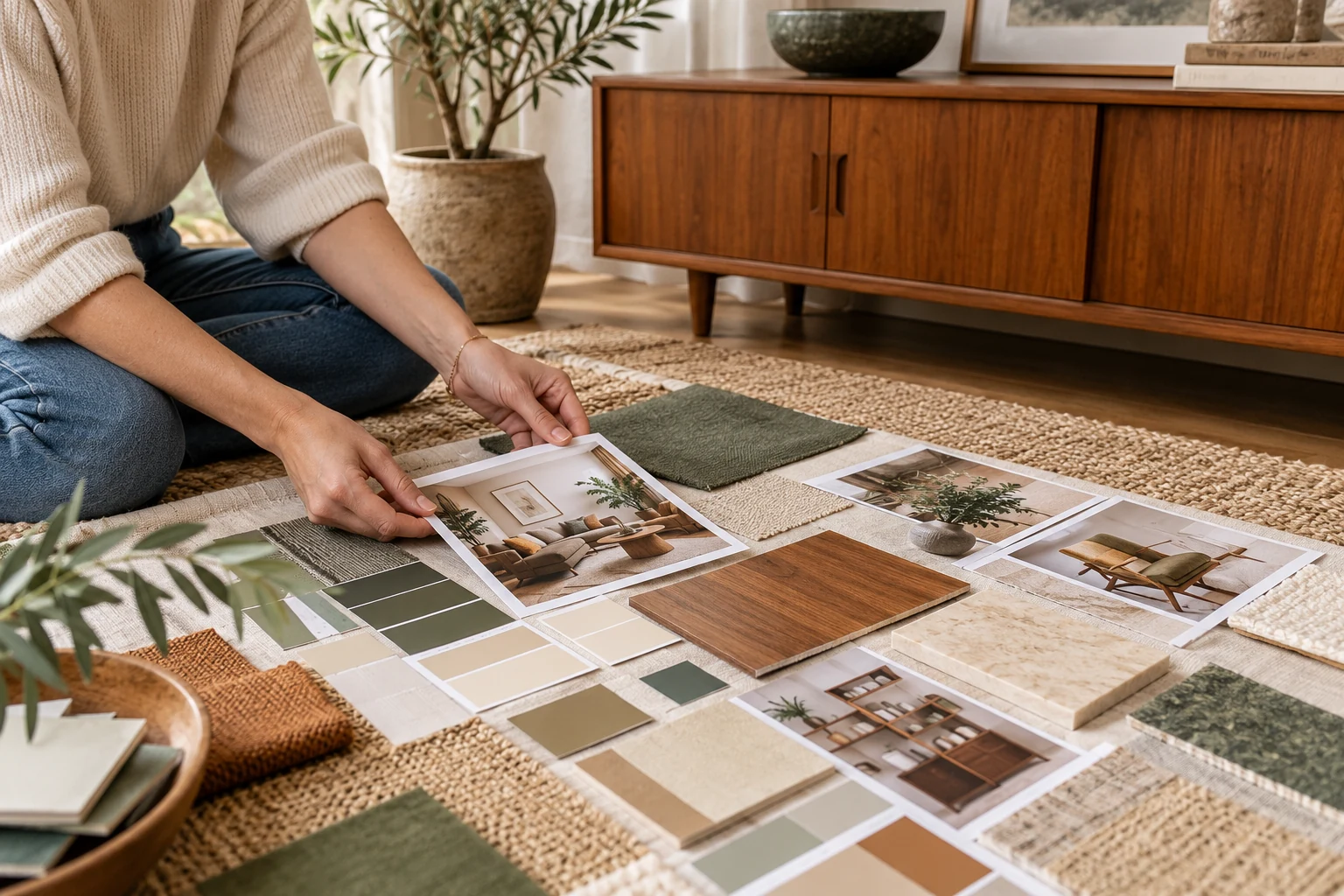
A mood board should help you make decisions, not simply collect attractive objects. When every image has a different floor, sofa and window, the collage can hide contradictions that will appear in the actual room.
Start with the space you have. Include retained finishes and furniture before adding new ideas, then use the board to explain a coherent direction.
Define the room and its practical brief
Write a sentence describing who uses the room and what needs to work better. Add a few words for the desired feeling. A living room for reading and conversation may call for different choices from one centred on television and children’s activities.
Put fixed elements on the board first
Photograph flooring, doors, built-in storage and furniture that stays. Try to use clear images in ordinary light. These elements form the background against which new colours will be judged; excluding them makes the board less useful.
| Board element | What it should explain |
|---|---|
| Existing pieces | What the proposal must work with |
| Reference images | Specific shapes, colours or textures you enjoy |
| Material samples | How finishes relate under real light |
| Product shortlist | What is available at the right size |
| Purchase record | What is approved, provisional or unpriced |
Select references for specific reasons
Choose a small set and annotate the feature you like. Separate the appeal of a shape, texture or colour from the room as a whole. This helps avoid copying an oversized sofa or expensive wall treatment when a textile was the actual attraction.
Build a restrained material palette
Bring paint, upholstery, curtain and cabinetry samples together. Include enough variation to see relationships without adding unrelated alternatives. Compare undertones beside the retained flooring rather than selecting each finish independently.
Keep layout and scale as a separate check
A board communicates visual direction, not furniture fit. Use actual dimensions on a room layout plan. If the furniture conflicts, revise the selection even when the collage looks balanced.
Add a purchase list with clear status
Record whether an item is retained, selected, provisional or still to be sourced. Include dimensions, supplier information and a spending allowance where known. Do not treat an unpriced reference image as an approved purchase.
Test the board in the room
View physical samples in daylight and evening light. Discuss cleaning and upkeep before committing. Once the direction is agreed, save a dated version so later purchases can be checked against the same combination.
Frequently asked questions
Can I make a mood board on my phone?
Yes. Keep it focused and supplement screen images with physical samples before ordering finishes.
Is a mood board the same as a 3D design?
No. A board groups references and materials; a 3D view shows a proposed room from a chosen angle. Neither replaces verified dimensions.
Should I buy everything shown on the board?
Only after checking size, specification, availability and budget. Clearly mark illustrative references that are not selected products.
Plan the room before you buy
Use the mood board to agree on direction, then support it with a measured layout and a realistic purchase plan. Explore Houspire’s room-by-room design plans to review a proposed appearance before arranging execution with your chosen contractor. Confirm the views, supporting documents and revision terms included in your order.