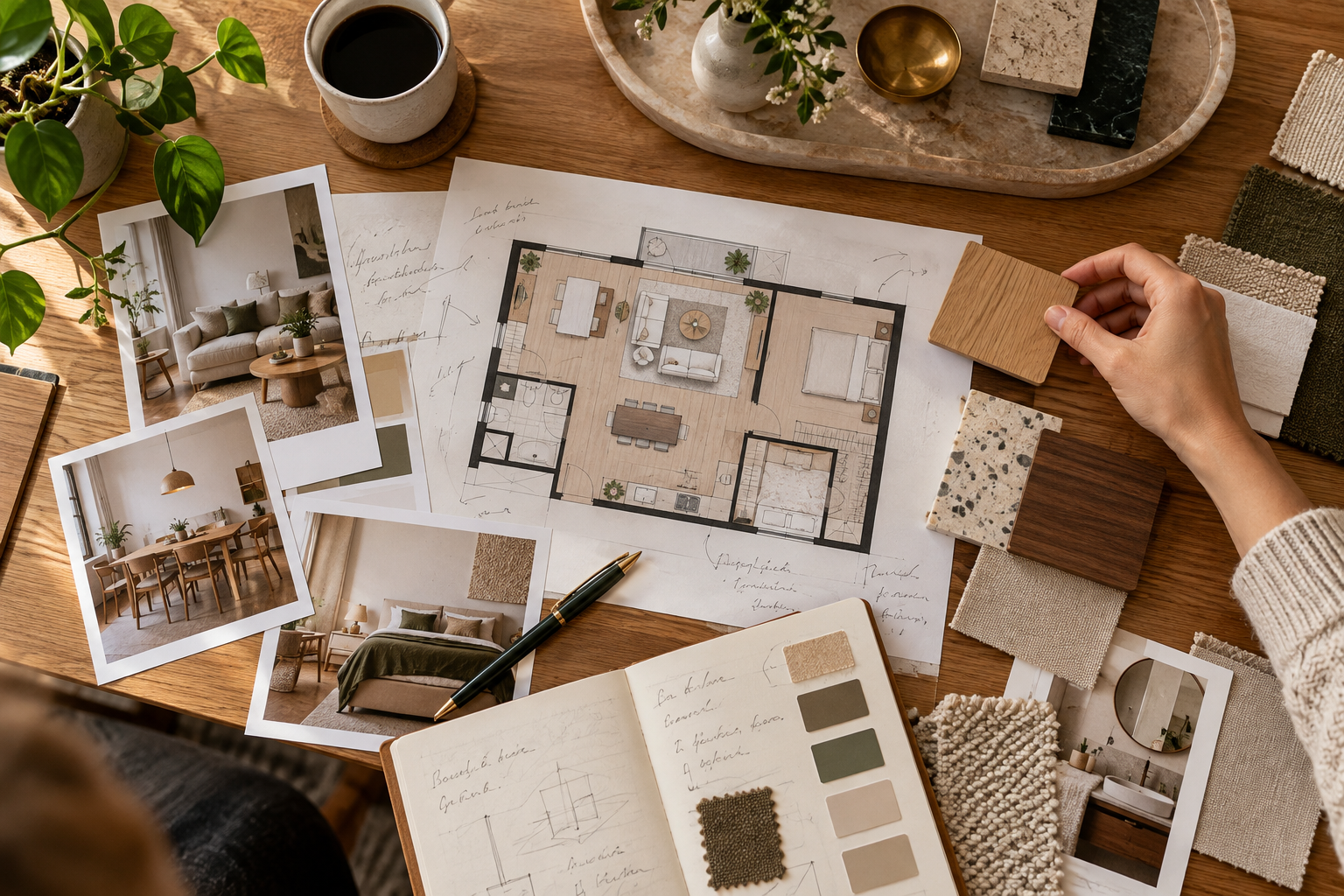
“Design my dream house” is an understandable ambition, but it leaves many practical questions unanswered. One person may imagine generous entertaining space; another wants quiet work areas and storage that hides everyday clutter. A useful brief explains what that dream means in ordinary life.
You do not need professional vocabulary. Clear examples of activities, preferences and constraints give a designer a stronger starting point than a large folder of unrelated images.
Describe the household and an ordinary week
List who uses the home and how routines overlap. Explain work calls, school preparation, cooking, visitors and overnight guests. Identify moments the current home handles poorly, such as bags collecting at the entrance or a dining table becoming a permanent desk.
Define each room by its activities
A bedroom may also be a workspace or dressing room. State which function matters most when space is tight. Avoid requesting a separate furniture item for every activity before the layout has been tested. Some needs may share a surface or move to a more suitable room.
| Brief heading | Useful example |
|---|---|
| Routine | Two people work from home on overlapping calls |
| Retained item | Keep the existing teak dining table; dimensions attached |
| Preference | Warm colours with mostly closed storage |
| Priority | Kitchen and sleeping arrangements before decoration |
| Constraint | Verify final dimensions after possession |
Identify what stays and what can change
Photograph retained pieces and record their dimensions. Include flooring, built-in wardrobes and appliances as well as furniture. Explain whether their position can change. An inherited cabinet has different implications if it must remain on one wall.
Explain the appeal of each reference
Choose a small set of images and annotate them. Write “warm timber with quiet walls” or “seating for conversation” rather than simply “love this”. Add examples you dislike where they clarify a boundary, such as very glossy finishes or extensive open shelving.
Make priorities visible within the budget
State the total amount available and what it must cover. Separate design fees from furniture, materials and execution. Rank requirements as essential, useful or optional. This allows a designer to simplify decoration before cutting a function the household needs daily.
Record the practical constraints
Include possession timing, tenancy permissions, society work rules and access restrictions where applicable. Mark measurements that need checking. Do not assume a designer can infer construction conditions or installation access from the apartment’s advertised area.
End with the outputs and decisions you need
Ask for help with specific questions: bed placement, shared storage, finish coordination or a phased purchase list. Confirm which layouts, views and drawings you are buying. The home interior planning guide helps connect the brief to a complete process.
Frequently asked questions
How many reference images should I send?
Send a focused selection that explains your preferences. Repeated or conflicting images are less useful than a few annotated examples.
Must the brief be complete before meeting a designer?
Prepare the known information and clearly identify unresolved choices. The consultation can help refine them within its agreed scope.
Can family members contribute separately?
Yes. Combine their needs into one agreed brief and flag conflicts before design begins.
Plan the room before you buy
A clear brief turns a broad ambition into decisions that can be reviewed, priced and carried out. Explore Houspire’s room-by-room design plans to review a proposed appearance before arranging execution with your chosen contractor. Confirm the views, supporting documents and revision terms included in your order.