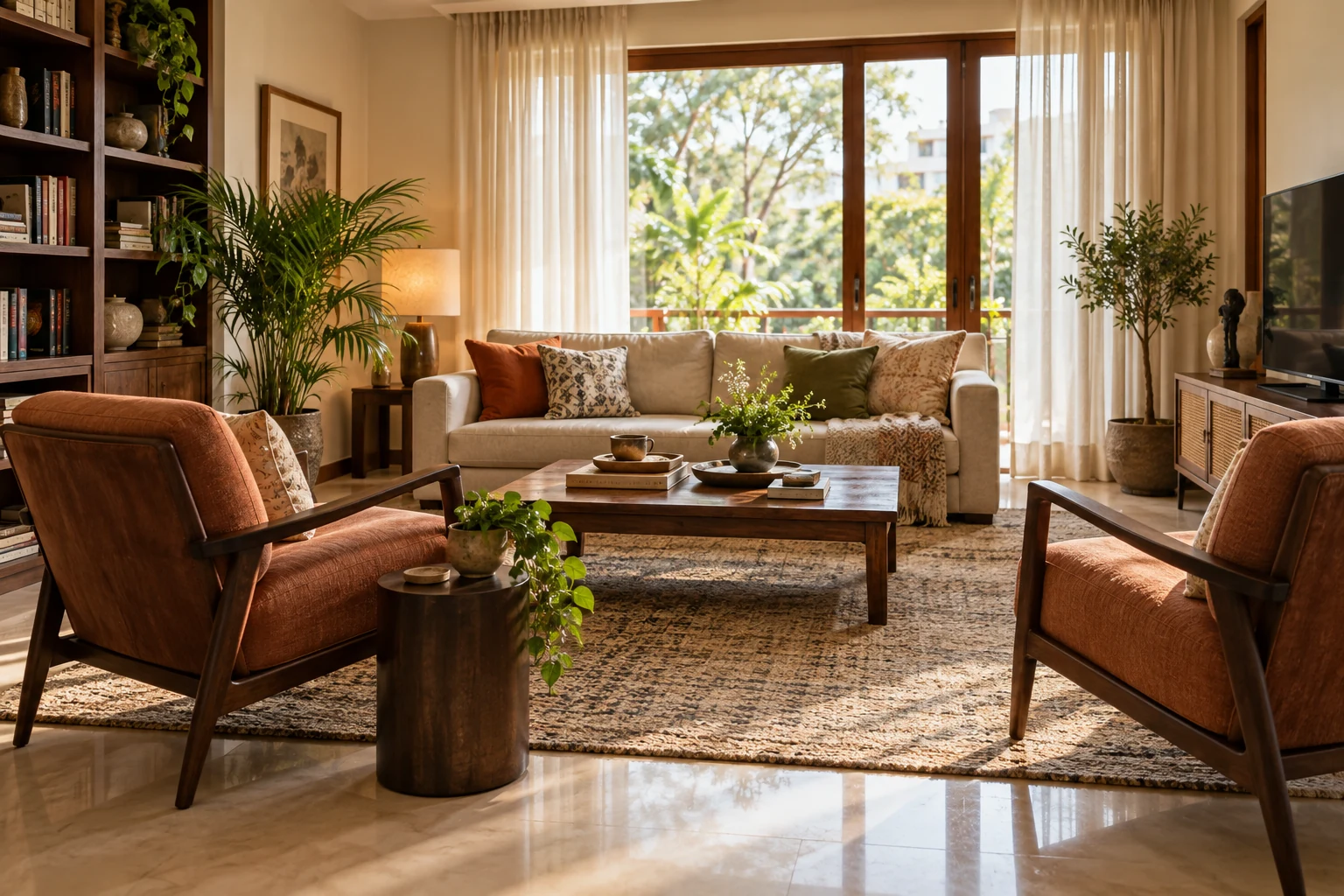
A living room does not have to organise every seat around a large television wall. If the household enjoys conversation, reading, music or looking out to a balcony, those activities can provide a different starting point.
You do not need to remove the TV to reduce its visual importance. Plan the activities first, then give equipment an appropriate position within the room.
Decide what the room should support
List how the room is used on ordinary evenings and when visitors arrive. Consider whether television viewing is occasional or frequent. A conversation-led arrangement still needs to account for viewing if it remains important to the household.
Group seating for interaction
Test a sofa and chairs that allow people to see one another comfortably. Check useful table access and movement around the group. Avoid spreading every seat along separate walls when this makes conversation awkward.
| Activity | Furniture relationship to review |
|---|---|
| Conversation | Seats that connect without blocking access |
| Reading | Chair, light and useful surface |
| Television | Viewing angle, reflections and equipment access |
| Family activities | Flexible floor or table space |
| Tidying | Storage for everyday objects |
Choose a focal area that belongs to the room
A window, a meaningful artwork, a bookcase or a retained cabinet may provide visual emphasis. Check proportions and everyday access. Do not create a decorative installation solely to replace the TV as another oversized wall feature.
Give reading its own useful light
Position a suitable chair, lamp and surface for books or a drink where they can be used comfortably. Review glare and daylight. A reading corner should not occupy a route needed to reach the balcony or another room.
Integrate the television modestly
Compare a lower cabinet, side position or other appropriate arrangement with the supplier and household. Check viewing, reflections, cable management and equipment ventilation. Concealment should not interfere with operation or servicing.
Balance display with household storage
Include toys, chargers, paperwork and remote controls in the plan. Concealed storage can create a quieter background while selected open shelves hold personal objects. Base the division on real belongings rather than a sparsely styled photograph.
Test the layout before buying new pieces
Represent furniture at actual sizes and check doors, drawers and extra visitors. A living-room 3D proposal can help assess balance after the measured arrangement works.
Frequently asked questions
Must all seats face one another?
No. Balance conversation, viewing and movement according to actual use. A mixed arrangement may serve the household better.
Can I keep a large existing television?
Yes. Test its position and the surrounding composition before replacing equipment or furniture.
What if the room is narrow?
Compare compact furniture and protect the main route. Avoid forcing a symmetrical seating group where the dimensions do not support it.
Plan the room before you buy
Let the activities you value shape the room, with the television included at the level the household actually needs. Explore Houspire’s room-by-room design plans to review a proposed appearance before arranging execution with your chosen contractor. Confirm the views, supporting documents and revision terms included in your order.