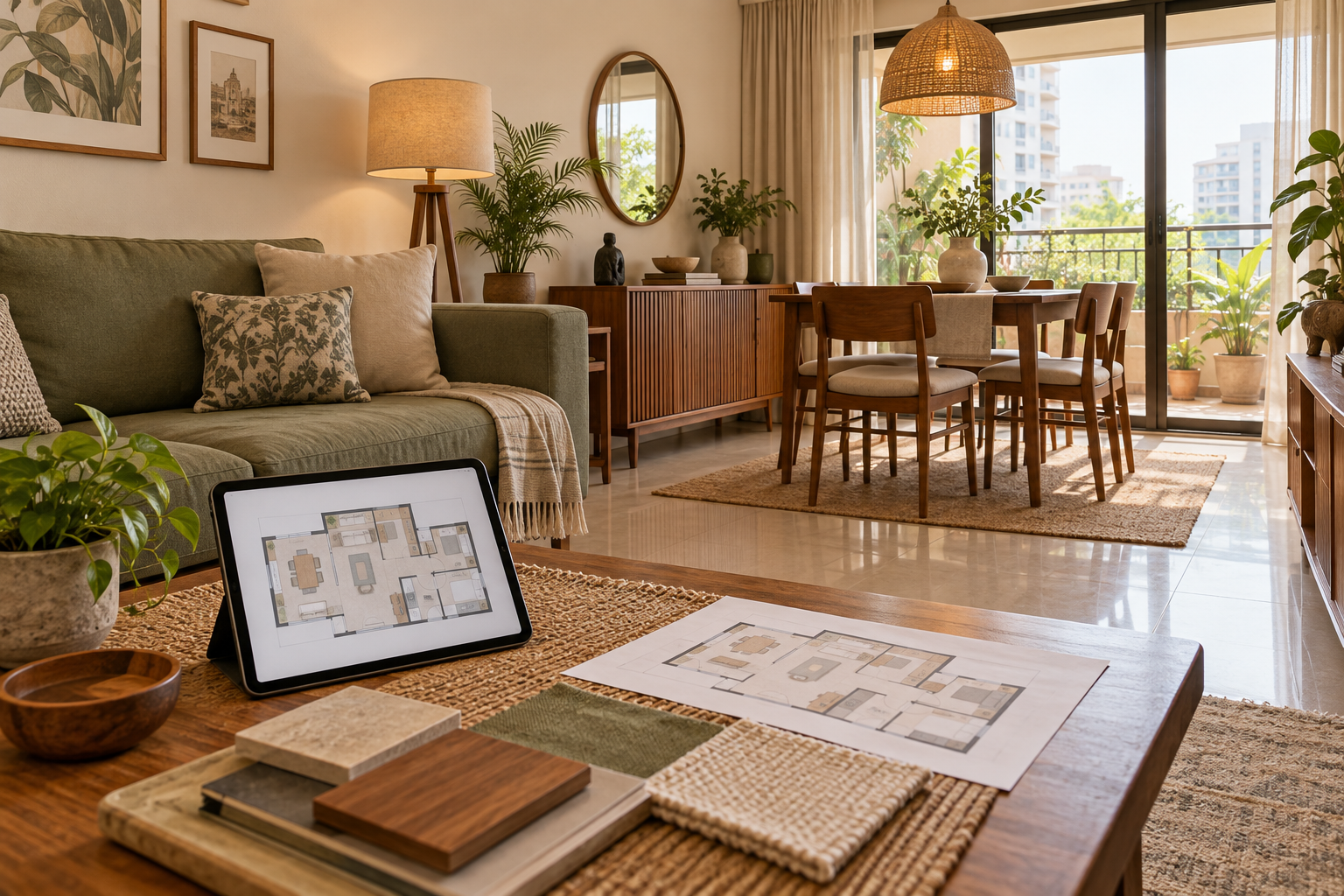
2 BHK Interior Design Budget: Costs and Breakdown
Planning interiors for a 2 BHK means balancing several needs at once: a functional kitchen, comfortable bedrooms, useful storage and a living area that works for everyday life.
The challenge is knowing how much of that an advertised package actually covers.
A complete 2 BHK interior design budget should include design fees, fitted furniture, loose furniture, finishes, required site work, delivery, applicable taxes and an allowance for uncertainty. Your final amount depends on the layout, specifications, existing condition and items you already own.
Start with what you need to complete the home, then compare prices against that list.
How Much Should You Budget for 2 BHK Interiors?
There is no single budget that applies to every 2 BHK apartment.
Build the budget from your own room-by-room requirements and current, itemised quotations. A fitted-furniture package and a fully furnished home cover different scopes.
Use such references to begin a conversation. Ask for a project-specific quotation that explains the quantities, materials, finishes and exclusions.
Your requirements may involve a smaller furnishing update or a more extensive renovation.
Decide Which Type of Project You Are Budgeting For
Before selecting a spending target, define the scope.
| Project type | What you need to price |
|---|---|
| Furnishing an existing home | New furniture, lighting, curtains and selected updates |
| Adding essential fitted units | Kitchen cabinets, wardrobes and required storage |
| Completing a new apartment | Fitted units, loose furniture, finishes, lighting and appliances |
| Renovating an older apartment | Repairs, removal, service changes and replacement interiors |
The same apartment can have very different budgets under these scenarios.
A new kitchen and two wardrobes do not represent the same scope as renovating bathrooms, replacing flooring and furnishing every room.
Build Your 2 BHK Budget Room by Room
Living and Dining Area
Start with seating, a practical dining arrangement and the storage you need.
Measure the proposed sofa and table within the layout. Include chair movement, access to doors and the route through the room.
Budget separately for:
- Sofa and additional seating.
- Dining table and chairs.
- TV cabinet or media storage.
- Curtains or blinds.
- Lighting.
- Any wall treatment or display furniture.
If spending is tight, compare a compact TV cabinet with a full-wall installation. Decide whether decorative joinery deserves priority over everyday furniture.
Kitchen
A kitchen budget needs more detail than a single cabinet total.
Clarify the cabinet layout, internal fittings, shutter finishes and hardware. Identify the countertop, sink, tap, backsplash and appliances separately, even if some are included in the same quotation.
Check whether electrical or plumbing changes are required.
Price accessories individually so you can choose those that solve a specific storage or access problem.
Main Bedroom
Plan the bed, wardrobe and movement space together.
Include the mattress and any bedside furniture in the budget. For a custom wardrobe, specify its internal arrangement as well as its size and exterior finish.
Keep optional additions visible: a dressing unit, upholstered headboard, wall panelling or a TV cabinet may be useful, but each changes the total.
Second Bedroom
Define its actual purpose before purchasing furniture.
A child’s room, guest bedroom and home office need different arrangements. A room serving two purposes may benefit from a flexible layout, but compare the cost and practicality of any specialised furniture.
Avoid buying a full bedroom set simply because the apartment is labelled a 2 BHK.
Bathrooms, Utility and Entrance
Inspect existing fittings and storage before budgeting for replacement.
List necessary repairs separately from visual upgrades. Include utility storage, laundry requirements and shoe storage where needed.
These areas are easy to overlook when most of the budget discussion centres on the kitchen and bedrooms.
Sample 2 BHK Interior Design Budget Breakdown
The following is a hypothetical allocation of a ₹7 lakh spending ceiling, not a market quotation or a promise that these allowances will cover your requirements.
It assumes usable flooring and bathrooms, retained major appliances and no substantial civil work.
| Category | Illustrative allocation |
|---|---|
| Design services and selected drawings | ₹20,000 |
| Kitchen cabinets and selected fittings | ₹1,70,000 |
| Wardrobes for both bedrooms | ₹1,30,000 |
| Beds, mattresses and bedside furniture | ₹80,000 |
| Living and dining furniture | ₹90,000 |
| Painting and minor surface preparation | ₹35,000 |
| Electrical changes and lighting | ₹30,000 |
| Curtains and furnishings | ₹25,000 |
| Delivery, assembly and miscellaneous installation | ₹20,000 |
| Reserve for applicable taxes not included, unresolved items and contingency | ₹1,00,000 |
| Total spending ceiling | ₹7,00,000 |
Replace each allocation with actual quotations. The reserve is not an estimate of tax liability or a standard contingency recommendation.
If confirmed costs exceed the ceiling, revise the scope before placing orders. Do not assume the remaining categories will somehow fit.
Can You Complete 2 BHK Interiors on a ₹3–₹5 Lakh Budget?
That depends on what is already available and what you mean by “complete.”
A limited budget can be easier to work with when you retain usable furniture, flooring, fittings and appliances. Starting from an empty apartment creates more purchases.
Test the budget by pricing essentials first:
- Kitchen requirements.
- Sleeping arrangements.
- Necessary clothing storage.
- Basic seating and dining.
- Lighting and window coverings.
- Required repairs and installation.
Then add optional work only if funds remain.
A package falling within your spending limit is not sufficient evidence that the whole home can be completed for that amount.
What Commonly Pushes a 2 BHK Budget Up?
Undefined Furniture Quantities
Adding a crockery unit, study, shoe cabinet and display storage gradually can change the project substantially. List all required units at the start.
Material and Hardware Upgrades
A different finish or internal mechanism can change the cost across several units. Ask for the price difference before approving upgrades.
Repairs Discovered Late
Assess visible damage and relevant services before finalising finishes. Where conditions remain uncertain, keep an explicit allowance.
Missing Purchases
Mattresses, curtains, appliances and light fixtures may sit outside a cabinet package. Include them in your own budget even when different vendors supply them.
Changes After Production Begins
Confirm layouts and specifications before fabrication. Later changes may affect materials, labour and delivery.
How Can You Reduce Costs Without Losing Everyday Function?
Prioritise the items you use most often.
A comfortable bed, accessible kitchen storage and a workable seating layout usually deserve attention before decorative additions.
Retain existing elements when they suit the design and remain serviceable. Compare refurbishment with replacement using actual prices.
Use custom furniture where its dimensions or storage solve a defined problem. For other items, compare suitable ready-made alternatives, including delivery and assembly.
You can also phase purchases. Complete essential work first and add nonessential décor later, while planning any underlying wiring or preparation in advance.
How Should You Compare 2 BHK Interior Quotations?
Give vendors the same furniture layout and requirement list.
Check these details side by side:
| Comparison point | What to verify |
|---|---|
| Quantities | Number and dimensions of units |
| Cabinet construction | Specified board, thickness and finish |
| Hardware | Brands, models and included accessories |
| Site work | Repairs, painting and service changes |
| Installation | What is included and who handles it |
| Purchases | Loose furniture, furnishings and appliances |
| Other charges | Taxes, delivery, handling and disposal |
| Changes | Process for approving additional costs |
Avoid comparing only the grand totals. First identify why they differ.
Plan the Design Before Committing to Execution
A settled furniture layout helps you decide what needs to be priced. Visuals help you review the appearance, while dimensions and specifications support clearer vendor quotations.
Houspire advertises ₹499 + GST for one 3D view of a selected room, covering up to three walls, with Budget Direction and Vendor Direction included. Additional drawings are separately priced. Construction, installation and on-site supervision are excluded.
Confirm the planning deliverables you need, then obtain quotations for the actual work and purchases.
Final Thoughts
A useful 2 BHK interior design budget starts with your household’s requirements and the condition of the apartment.
Price essential items room by room, check package exclusions and keep unresolved costs visible. Approve additions only after understanding their effect on the total.
Explore Houspire’s design plans to visualise your apartment before placing furniture and execution orders.
Frequently Asked Questions
What is a realistic budget for 2 BHK interiors?
It depends on the scope, specifications, existing condition and retained items. Use published provider ranges as initial references, then build a complete budget from quotations for your own requirements.
Does a 2 BHK interior package include beds and a sofa?
Not necessarily. Some packages focus on kitchens, wardrobes and other fitted units. Check loose furniture, mattresses, appliances and furnishings individually.
Should I budget using carpet area?
Use verified carpet area when calculating a whole-project comparison rate. Build the actual budget from required items and work quantities, because area alone does not define the scope.
Can I furnish my 2 BHK in stages?
Yes. Identify essentials first and plan shared decisions, such as finishes and service changes, before completing individual rooms. Keep later purchases outside the current committed total.
Should both bedrooms receive the same budget?
No. Allocate according to use, existing furniture and storage requirements. A guest room may need less work than a main bedroom or a room combining study and sleeping functions.
How do I avoid exceeding my interior budget?
Finalise the scope, obtain comparable quotations and track committed purchases against your spending ceiling. Price each proposed change before approving it, and retain an appropriate allowance for unresolved work.