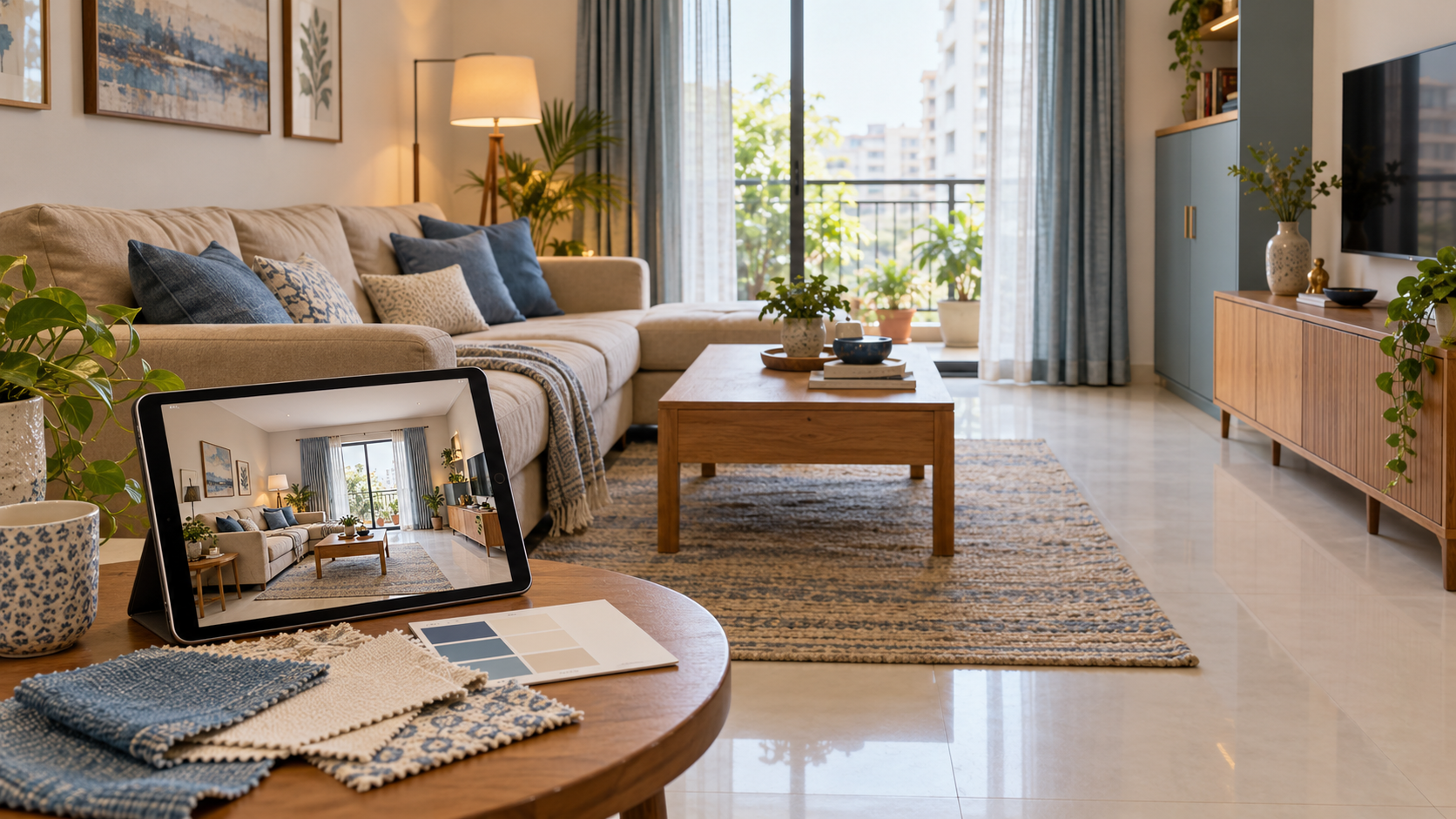
Budget Home Interior Ideas: 10 Ways to Create a Coordinated Look
A home feels custom when its elements work together.
Furniture should fit the room, colours should repeat thoughtfully and storage should suit the way you live.
You do not need bespoke furniture on every wall to achieve that effect. Carefully chosen ready-made pieces, selective alterations and consistent finishes can give a room a more personal appearance.
Start with what you already own, resolve the layout and spend on details that make the whole room feel considered.
Here are ten budget home interior ideas to explore before committing to extensive custom work.
1. Build the Colour Palette Around Existing Furniture
Replacing usable furniture simply to match a new style can consume a large part of the budget.
Instead, use a retained piece as the starting point for the room.
How to Make It Look Custom
Identify colours already present in the sofa, flooring, curtains or wooden furniture. Repeat selected shades through smaller elements such as cushions, artwork and lampshades.
For example, a brown sofa could work with warm neutral walls, muted green cushions and artwork that includes both tones.
Test samples together in the actual room before purchasing.
Budget check: Price the complete refresh before deciding whether the retained furniture still makes sense.
2. Fit Ready-Made Curtains to Your Windows
Curtains can appear more tailored when their length, fullness and placement suit the window.
Ready-made panels may work well if suitable sizes are available and only straightforward alterations are needed.
How to Make It Look Custom
Measure the installed track or rod position before selecting panels. Consider where the curtains will stack when open and whether they interfere with furniture, switches or ventilation.
Choose a consistent curtain treatment across connected spaces where practical.
For a clean finish, have suitable panels shortened professionally rather than letting excess fabric collect unintentionally on the floor.
Budget check: Include panels, lining if required, tracks, brackets, alterations and installation.
3. Coordinate Handles Across Existing Cabinets
Different handles can make otherwise compatible furniture feel disconnected.
Replacing selected handles is one way to bring a shared finish into the room without replacing entire units.
How to Make It Look Custom
Choose a handle style that works with the furniture’s proportions and repeats an existing metal finish, such as a lamp or mirror frame.
Measure the distance between existing screw holes. Matching that spacing can avoid unnecessary drilling and repairs.
You do not need identical handles everywhere, but a consistent finish or shape can create a relationship between pieces.
Budget check: Count every handle before ordering and include fitting or surface repairs.
4. Combine Standard Storage Units into a Planned Arrangement
A group of carefully selected ready-made cabinets can create an organised storage wall.
The effect depends on alignment and proportion rather than simply placing several units together.
How to Make It Look Custom
Choose compatible heights, depths and finishes. Plan the arrangement around the belongings it needs to hold.
Where appropriate, a carpenter may be able to add a coordinated top or finishing panel, subject to the units’ construction and installation requirements.
Keep access to outlets and avoid obstructing ventilation.
Budget check: Compare the units, delivery, assembly, fixing and modifications with a custom quotation. The ready-made route is not automatically cheaper.
5. Create a Focal Wall with Paint
A painted feature can give a room definition without extensive cladding or panelling.
It works best when connected to the furniture arrangement.
How to Make It Look Custom
Consider a colour block behind a bed, a painted section around a reading corner or a contrasting wall behind the sofa.
Align the treatment deliberately with nearby furniture and architectural features. Avoid adding shapes solely to fill empty space.
Prepare the surface properly and test the colour under daytime and evening lighting.
Budget check: Include preparation, primer where required, paint and labour. A small feature area can still need careful finishing.
6. Make One Upholstery Change That Ties the Room Together
A bench cushion, chair seat or headboard can introduce a chosen fabric without requiring an entirely new furniture set.
This is especially useful when a piece is structurally sound but its upholstery no longer suits the room.
How to Make It Look Custom
Select fabric in relation to the surrounding colours and daily use. Check care instructions and suitability for the intended application.
Repeat the fabric or one of its colours sparingly elsewhere—for example, in a cushion or throw.
Inspect the existing frame and cushioning before deciding on refurbishment.
Budget check: Request a complete price covering fabric, filling, labour, transport and any frame repairs.
7. Plan Lighting Around Specific Activities
Thoughtful lighting can make a room feel designed without an elaborate ceiling.
Start by identifying where light is needed for reading, working, dressing and general movement.
How to Make It Look Custom
Use lamps or other suitable fittings to support those activities. Coordinate visible finishes with the room rather than buying each fitting independently.
Check the effect of the light from normal seated and standing positions. Avoid exposed glare and awkward cable routes.
Plug-in options can be practical where outlets already exist. Have any required electrical alterations assessed and completed by an appropriate professional.
Budget check: Include bulbs, installation, controls and electrical work—not only the fixture price.
8. Give Artwork a Consistent Framing Treatment
Personal photographs, prints and existing artwork can feel more cohesive when their framing is considered.
The collection does not need to be expensive or bought at once.
How to Make It Look Custom
Use a shared frame finish, compatible mounts or a deliberate arrangement.
Lay the composition out on the floor or use paper templates before fixing it to the wall. Check its relationship to the sofa, bed or console below.
Choose images that matter to you rather than filling every wall with generic decoration.
Budget check: Include printing, mounts, frames and suitable fixing hardware.
9. Define a Small Area with Furniture You Already Have
An unused corner can become a purposeful part of the room with a chair, lamp and small surface.
A bedroom dresser might also serve as a getting-ready area with better storage and lighting.
How to Make It Look Custom
Choose the function first: reading, working, dressing or storing everyday items.
Then test the arrangement without buying anything. Move existing pieces into position and check movement, access and comfort.
Add only what is missing. A workspace, for example, needs a usable chair and appropriate working arrangement—not just an attractive tabletop.
Budget check: Avoid adding furniture merely because a corner is empty. Open space can be useful too.
10. Repeat Finishes Across the Home
A few repeated materials can make rooms feel connected while allowing each to have its own character.
This can be achieved through smaller purchases rather than replacing major furniture.
How to Make It Look Custom
Choose a simple finish direction and repeat it selectively.
| Existing element | Possible coordinating detail |
|---|---|
| Light wooden furniture | Similar-toned picture frames or a small shelf |
| Black cabinet handles | A lamp base or mirror frame |
| Warm neutral sofa | Related curtain and cushion colours |
| Muted green artwork | A throw or upholstered seat |
| Woven chair detail | A basket or lampshade with a compatible texture |
Compare samples where possible. Two finishes described as “oak” or “brass” may look noticeably different.
Budget check: Work around the largest retained elements instead of trying to replace everything to achieve an exact match.
Which Ideas Should You Try First?
Start with changes that address a visible problem or a daily inconvenience.
| Your main problem | First idea to explore |
|---|---|
| The room feels mismatched | Coordinate the palette around retained furniture |
| Windows look unfinished | Review curtain sizing and installation |
| Cabinets look disconnected | Compare compatible handle replacements |
| Everyday items create clutter | Plan storage around specific belongings |
| The room lacks character | Add personal artwork or a focused paint treatment |
| Evening lighting feels uncomfortable | Plan lighting around activities |
| Furniture is usable but tired | Compare refurbishment with replacement |
Prioritise the layout before decorative purchases. A coordinated finish cannot compensate for a sofa that blocks a doorway or storage that is difficult to open.
How to Keep the Total Budget Under Control
For every proposed change, record the complete cost and the result you expect.
Include materials, alterations, delivery, installation, taxes and removal where relevant.
Separate the list into:
Essential: Repairs and changes needed for everyday use.
High priority: Improvements that resolve the main design problem.
Optional: Decorative additions that can wait. Compare ready-made, refurbished and custom options using equivalent requirements. A modest-looking alteration can become expensive if it involves extensive repair or installation work.
Planning a Budget Interior with Houspire
For a Houspire brief, share photographs, measurements and a clear list of furniture you want to retain.
Explain your spending limit and identify the changes that matter most. Reference images are useful when you specify the colours, finishes or arrangements you like.
Review the selected package’s deliverables and confirm what additional specifications or drawings are needed before ordering fitted work.
Final Thoughts
A custom-looking home comes from coordinated decisions. Resolve the layout, work around retained furniture and compare the complete installed cost of each change.
Explore Houspire’s design plans to review your room before committing to permanent alterations.
Frequently Asked Questions
Can ready-made furniture look coordinated?
Yes. Compare dimensions, finishes and proportions together, and plan the arrangement around your actual room.
Is refurbishing always cheaper than replacing?
No. Include repairs, labour, transport and finishing before comparing both options.
What should I change first?
Start with a layout or storage problem that affects daily use. Then coordinate finishes and decoration.
Can I improve a rented home?
Check your agreement and permissions. Focus on movable furniture, textiles and permitted changes.